Stealth Again

004

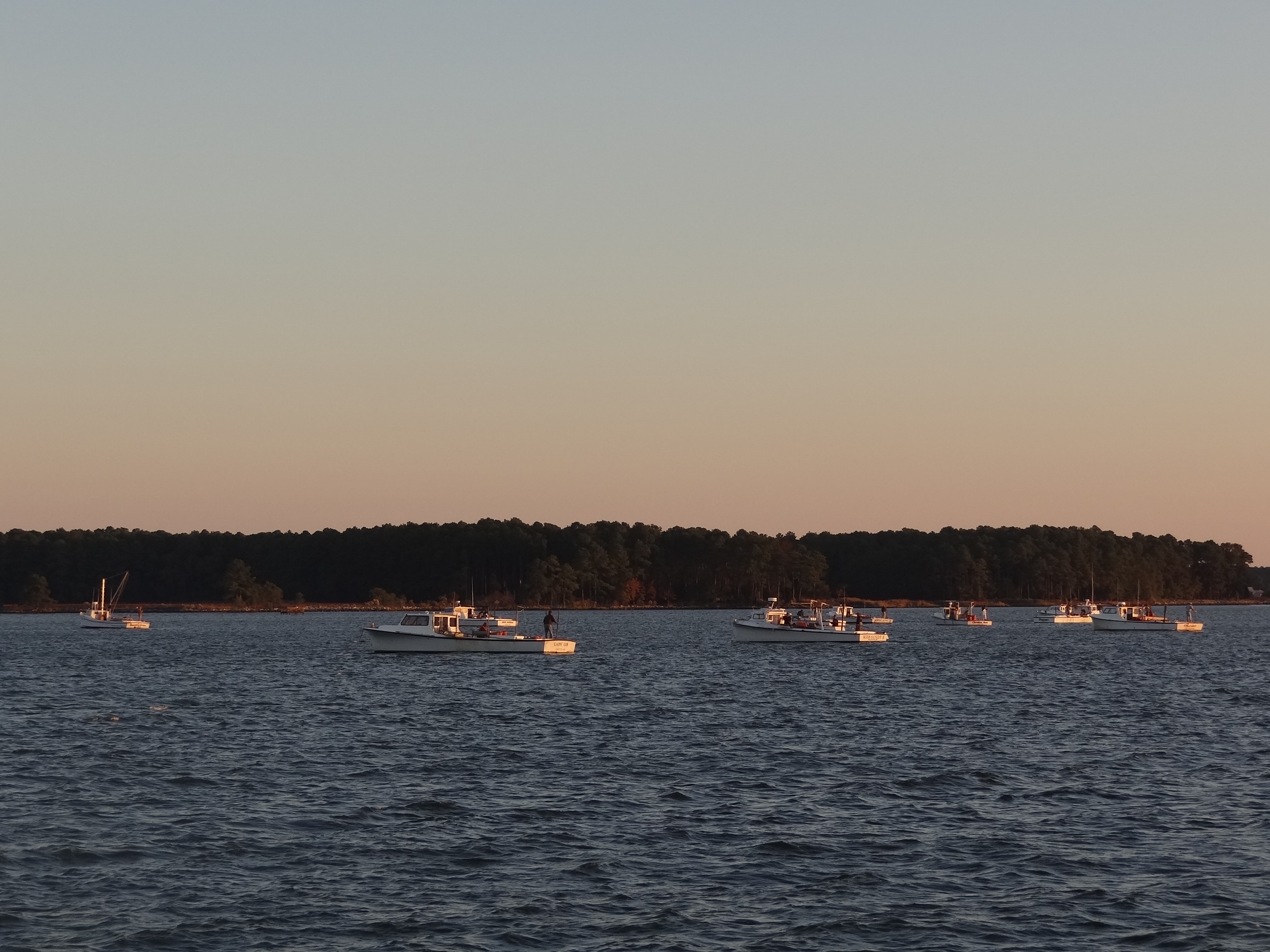
Early risers gather before going out for today’s catch

Wanting better protection for the night and positioning for heading south down the Bay in NW winds, we left Oxford bound for Balls Creek off Broad Creek (one of many Broad Creeks around). During the night the wind would shift from S to NW, picking up to 20kts with higher gusts.

We had a new (secondary) anchor watch app for the iPhone5 called Anchor! and thought this was a good opportunity to try it out. Ideally you mark where you drop your anchor (as in be out with the app going at the bow and touch the anchor symbol) then create a comfort zone circle around yourself. The app will notify you with an email, sound an alarm and your phone will flash if you move outside your safety circle. If you are off the boat and get the email, you can use the “Find My Phone” feature to see on the map just where the boat has moved to. Another app we tested out had the option for the on-board phone to call your other phone so you’d know asap if you might be dragging. We contacted the creator of Anchor! to suggest he add the calling option to his app (we liked Anchor! better than the other) and heard back quickly that he would if he could make it work with his application.

The good news is that we didn’t drag, the bad news was I got the worst night’s sleep of the trip. The wind was noisy and so was the base of the mast and some furl line squeaked on and off all night. Ugh.

As we left our creek for Broad Creek which would lead to the Choptank and on in to the Bay, so many oystermen were gathered- twice as many as I could photograph- ready to begin their day which for us was starting earlier than usual. My Salada tea tag read, “Wind is air in a hurry.” How apropos for today. The wind was still honkin’ for the first few hours but after 10am we shook out the reef and let the jib out full. The wind continued to diminish and soon we were motor-sailing, then the last couple hours were a pure motor.

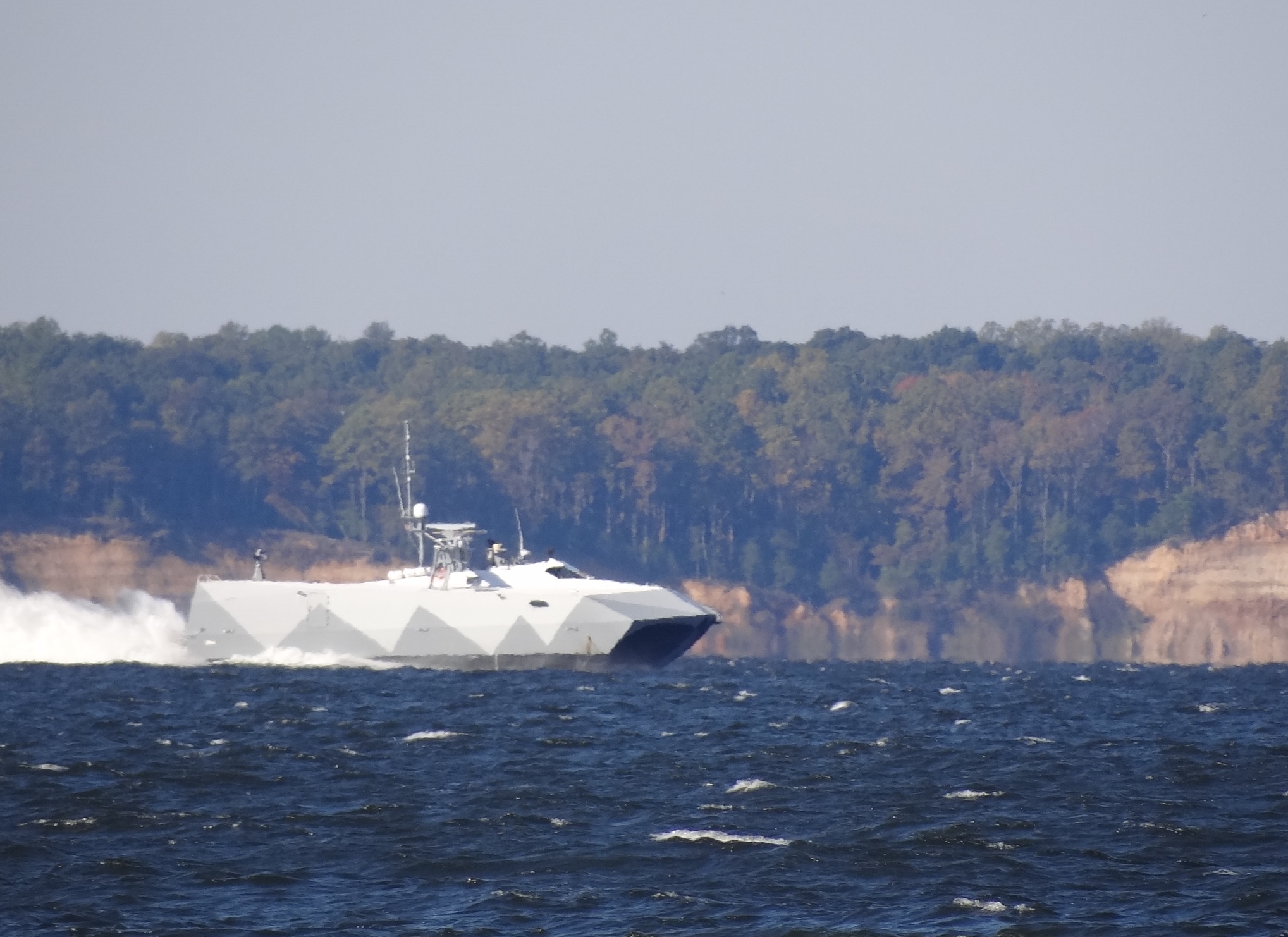
Heard s/v Harmony II calling another vessel; closing in on them!  This cool dude was heading north along the western shore. Our friends at Wikipedia say she’s M80 Stiletto, a prototype naval ship with a pentamaran hull design. Launched in 2006 she appears to be an “only.” A healthy cruising speed of 40kts with a top speed of 50kts, she was crawling at 30kts when we saw her (AIS).  Carbon fiber construction with a 2 1/2 ft draft for her large 90’x40’ body; she could visit the Bahamas easily with such a shallow draft. 🙂

Naval stealth boat M80 Stiletto- barely skims the waves

Naval stealth boat M80 Stiletto– barely skims the waves

Further down the bay several miles north of our turn east through Kedges Strait a Navy vessel hailed a southbound catamaran- but it wasn’t us. Hadn’t seen many sailing vessels today, so was curious to see another cat probably headed for Crisfield too.  We subsequently spoke to Navy Moose and learned that target practice was occurring just south of our turn east and we just needed to keep a healthy two miles away. So that explains the AIS vessel near the dotted “bombing” circle on the chart.

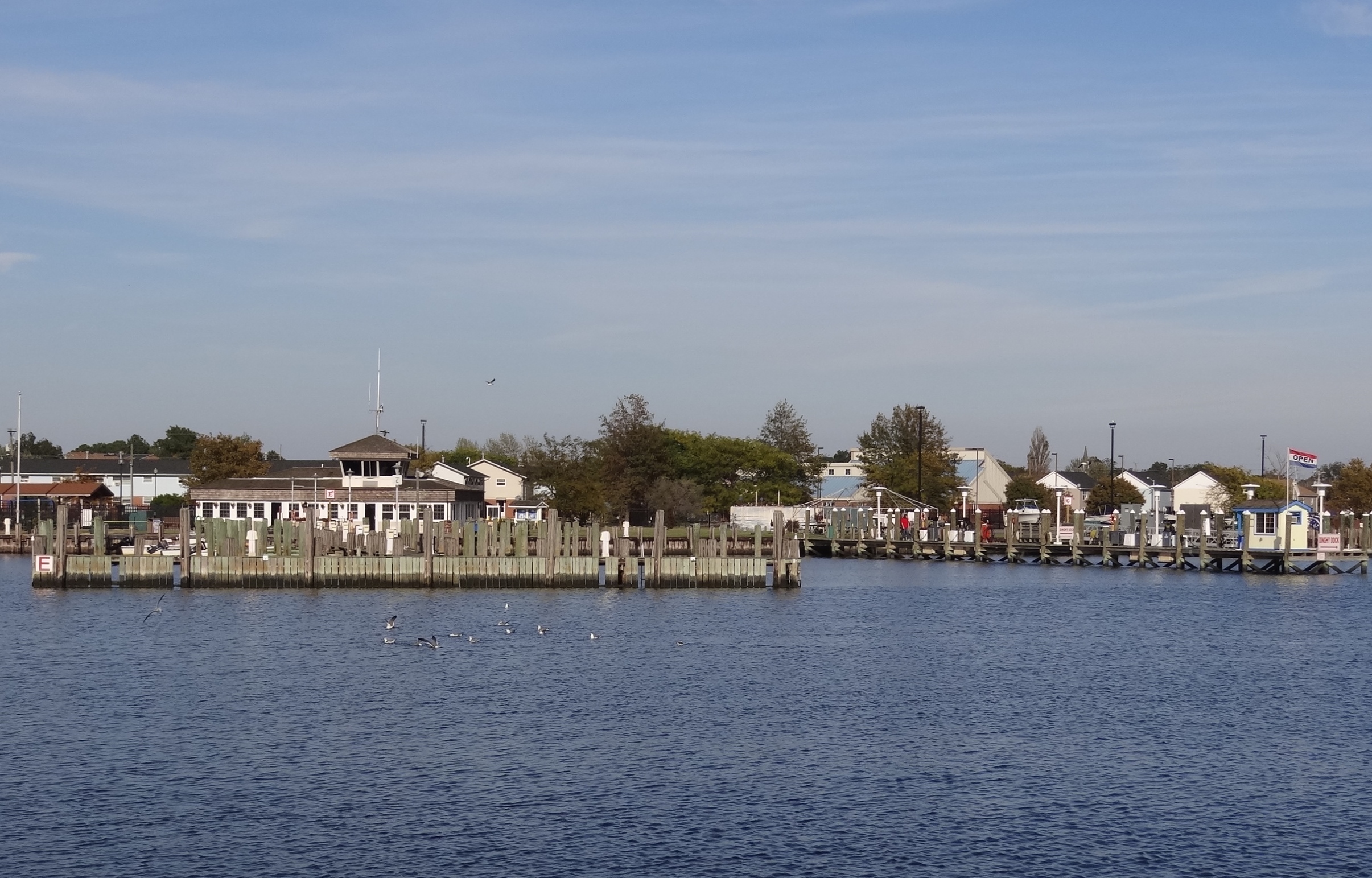
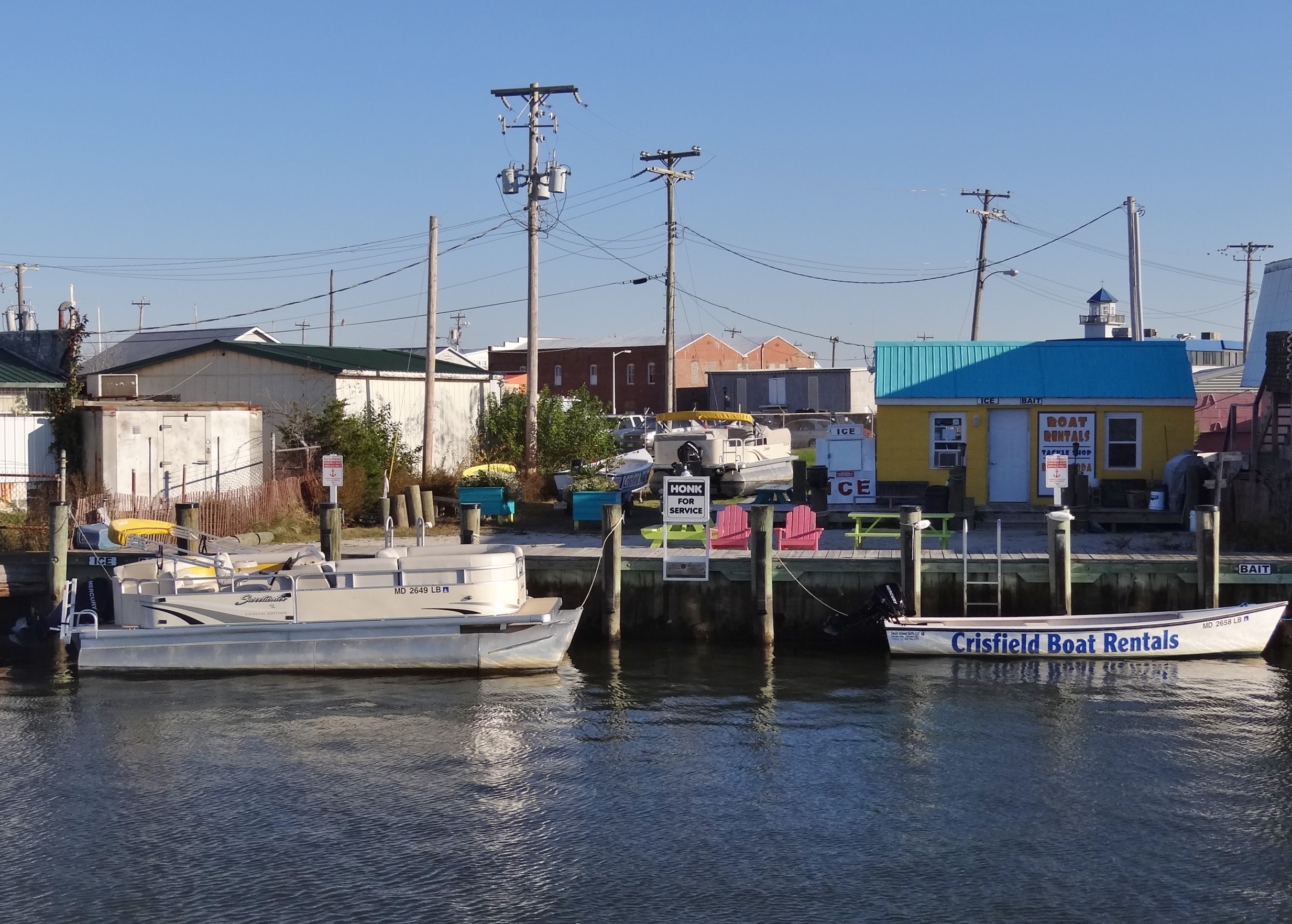
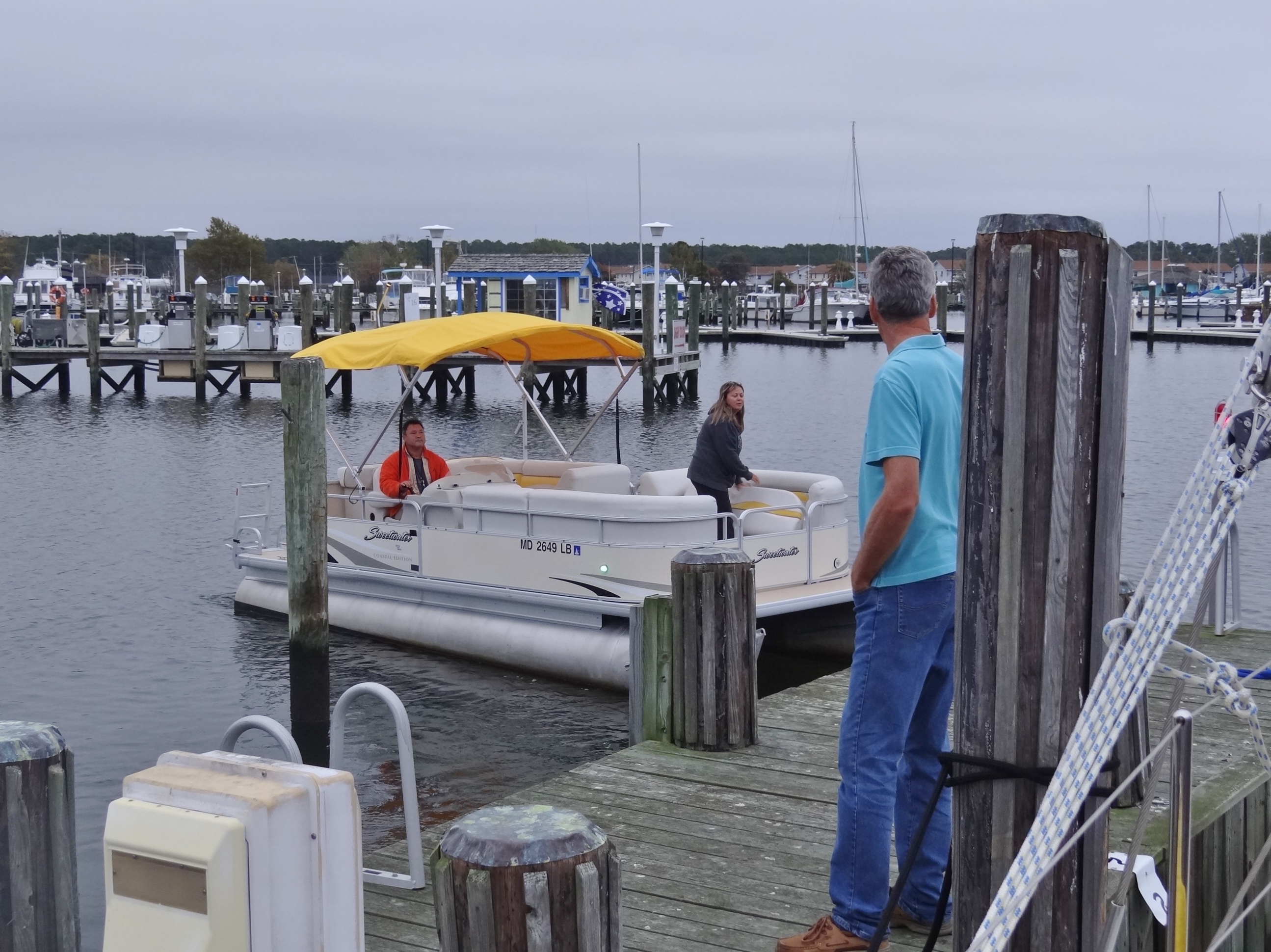
We arrived at Somers Cove Marina in Crisfield at 4pm, a 62nm, eight and ½ hour-day. Wind more hurried today than usual. A great sail while it lasted.

St Michaels and Oxford, MD

Amazingly, Mr Rocna offered little resistance to becoming dislodged after being so nice and cozy in mud for a week. We returned to the marina just up the South River. Our repaired sails got dropped off, we filled our water tanks then headed across the Bay to beautiful and sophisticated St. Michaels.  Our cruising guide offers this description, “…is a comfortable mix of city-sophisticated and country-friendly. Upscale shops, world-class restaurants and retired national movers and shakers rub shoulders with gun shops, local watering holes and boat carpenters.” Personally, I was going for the shops, the grocery and the Chesapeake Bay Maritime Museum. Plus, if my sis-in-law Kerry says it’s worth a visit, then it’s got to be good.

Chesapeake Bay Maritime Museum- among our first sights as we dinghy in

Chesapeake Bay Maritime Museum- Hooper Straits Lighthouse – among our first sights as we dinghy in

Names worth noting who were connected to St Michaels (named for the Episcopal parish established there in 1677) are Frederick Douglass and James Michener. After escaping on a Baltimore-bound ship in the 1830s, Frederick Douglass became an abolitionist activist and lecturer, later the U.S. representative in Haiti.  Generations later, writer James Michener called St Michaels home while researching and writing his historic novel, Chesapeake.  The area also boasts trendsetters in boat design and is well-known for log canoes that were first built in the late 1800s as shallow-draft oyster boats. They gradually evolved into slim-lined wooden sailboats you can see racing around the nearby Miles River.

We arrived for a very late lunch at the Crab Claw then walked to Talbot St; oh which way to turn? Shops to the left and right! We chose left to see what we could see. Gorgeous fall and Halloween decorations everywhere, seats for the weary at every shop, friendly and helpful clerks and not too crowded thanks to the time of year; what’s not to love?

All decked out on Talbot Street

All decked out on Talbot Street

Grabbed a few fresh provisions at the- love the name- Acme grocery and a Red Box movie. Arrived back at the anchorage to find many more boats anchored; no surprise as the winds were to be calm, calm.

Not the tour boat Patriot; can you identify this old gal?

Not the tour boat Patriot; can you identify this old gal?

The next morning we dinghied in to the well-kept, good-sized dinghy dock that lies in between the Crab Claw and the tour boat Patriot. We met the folks on s/v Sanderling, Rhode Island cruisers slowly south-bound; they had noticed our CT registration number. I had to laugh when they told us they’d tried to meet Harmony II near Annapolis; you mean the Harmony II we know from Deep River Marina?  Yes, one and the same. They left at least a week before us and we’d been wondering where they were. Got that answer unexpectedly.

First stop was the multi-building-exhibit Chesapeake Bay Maritime Museum, an 18-acre waterfront complex with a boat builder’s shed, restored Chesapeake workboats and pleasure craft and the rescued Hooper Straits Lighthouse.

Oystering on the Chesapeake- a real skipjack to climb aboard

Oystering on the Chesapeake- a real skipjack to climb aboard

We were blown away by the dramatic change in size

We were blown away by the dramatic change in size

Canned oysters- a huge variety of labels to grab your attention

Canned oysters- a huge variety of labels to grab your attention

Real life oystering in action as we depart St Michaels

Real life oystering in action as we depart St Michaels

Thursday we headed down, around and up the Tred Avon River to Oxford, one of the oldest towns in Maryland. Officially founded in 1683; in that year it was named as a seaport and laid out as a town. Oxford and a new town called Anne Arundel (now Annapolis) were the only ports of entry in all of Maryland at that time. Until the American Revolution, Oxford was an international shipping center surrounded by wealthy tobacco plantations.

After the war Oxford businesses went bankrupt as wheat replaced tobacco as a cash crop.  After the Civil War, Oxford was revitalized with the completion of the railroad in 1871 and improved canning and packing methods opened national markets for oysters from the Bay’s bountiful beds.

As you know, good times don’t last and by the early 1900s the oyster beds were stripped, the packing houses closed and railway and steamships slowly disappeared. Sleepy town Oxford, inhabited mainly by watermen who still worked the waters of the Tred Avon sat waiting for the next cycle of its life.  Any surprise that today the dial has turned to “tourism and leisure activities”?  We loved Oxford’s quiet charm with lovely homes lining the main street (Morris Street- N & S) instead of a plethora of shops.

Cutie along N. Morris Street in Oxford

Cutie along N. Morris Street in Oxford

We spent a solid 30 minutes trying to find our way to the main drag and/or a place open for lunch. Off season many eateries are either only open for dinner or only open weekends. The street in the photo below, we ended up there twice. Got out to Schooners only to find them not open, but we did learn that the place Russ really wanted to find- was indeed open.

Russ calls the Robert Morris Inn to be sure they are serving lunch

Russ calls the Robert Morris Inn to be sure they are serving lunch

Robert Morris Inn and Salter's Tavern; a stone's throw from the ferry

Robert Morris Inn and Salter’s Tavern; a stone’s throw from the ferry

We enjoyed a delicious, leisurely lunch on the street-facing narrow porch of the Inn. The Inn was built prior to 1710 by ships’ carpenters with wooden pegged paneling, ship nails and hand hewn beams. An English trading company bought the house in 1730 for Robert Morris who represented the firm’s shipping business in Oxford.

The inn has been enlarged several times since its first use as a private home. The original flooring is Georgia white pine, the tavern’s slate floor came from Vermont and four of the guest rooms have fireplaces built of brick made in England and used as ballast in the early sailing days. (now we use bottles of wine!)

As we sat on a bench I noticed all signs pointed down Market St

As we sat on a bench I noticed all signs pointed down Market St

Looking down Market St to the dinghy dock and Ortolan anchored (farther away than she looks)

Looking down Market St to the dinghy dock and Ortolan anchored (farther away than she looks)