Skunkapes, eagles and owls, oh my!

Back in December we’d shortened our stay in Florida City so we could make two additional stops before Melbourne. Trail Lakes campground was right on the Tamiami Trail (aka Rte41) in Ochopee, FL near the western boundary of the Big Cypress Preserve and surely a strange land stood before us when we pulled in.
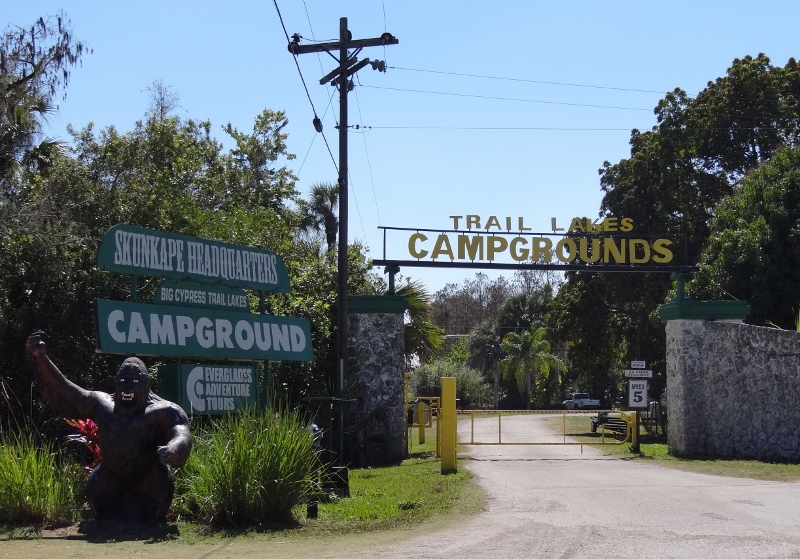
What kind of place did I book us into?

What kind of place did I book us into?

Our site is best described as pull-alongside, the pond that is. The clump of grass blocks the sign that indicates Wi-Fi and it did work with our booster. One brisk 48 degree morning we enjoyed this scene (taken from a side window).

A chilly, misty pond morning

A chilly, misty pond morning

During the day when we were around (not much) I’d sit in a chaise, read and keep eyes and ears open for flitting feathered friends. The bare tree across the pond gave me the best chance for a clear shot.
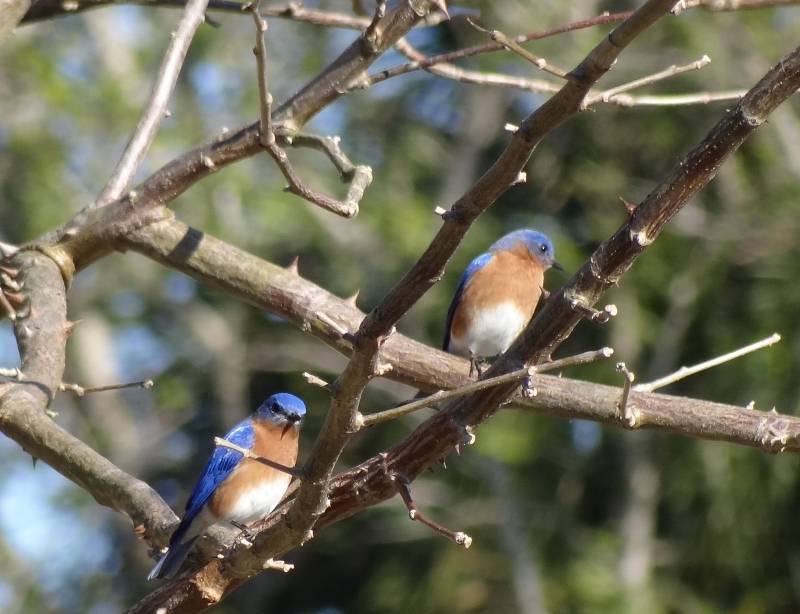
Eastern Bluebirds- not commonly seen in these parts

Eastern Bluebirds- not commonly seen in these parts

From this campground we ended up exploring mostly west into the Fakahatchee Strand Preserve, the Ten Thousand Islands Refuge and down CR29 to Everglades City and Chokoloskee at the road’s end. Don’t you love these Indian-based names? SR/CR 29 forms the eastern boundary of Big Cypress Nat’l Preserve with Tamiami Trail running west to east through the lower third. Everywhere you drive you see wading birds, gators and birds of prey. Rte 41 is filled with places to stop and enjoy whatever floats your boat; sightseeing, adventure, hiking, dining but with the Tamiami Canal running right next to the road many cars would just pull over to take in the scene.

In 1974 Congress created BCNP to protect the fresh water’s natural flow from the Big Cypress Swamp into the Everglades and Ten Thousand Islands. The swamp’s fresh water feeds a mosaic of five distinct habitats in its 729,000 acres: hardwood hammocks, pinelands, prairies, cypress swamps and estuaries. In creating the Preserve, Congress honored the occupancy and customs of the Miccosukee and Seminole peoples. Villages exist in the Preserve today as they have for generations; but we’d have to save a visit for another time.

After a stop at the BCP Welcome Center where we take in a wonderful video, check out the displays and wildlife out back, we decide to drive Jane’s Scenic Drive.
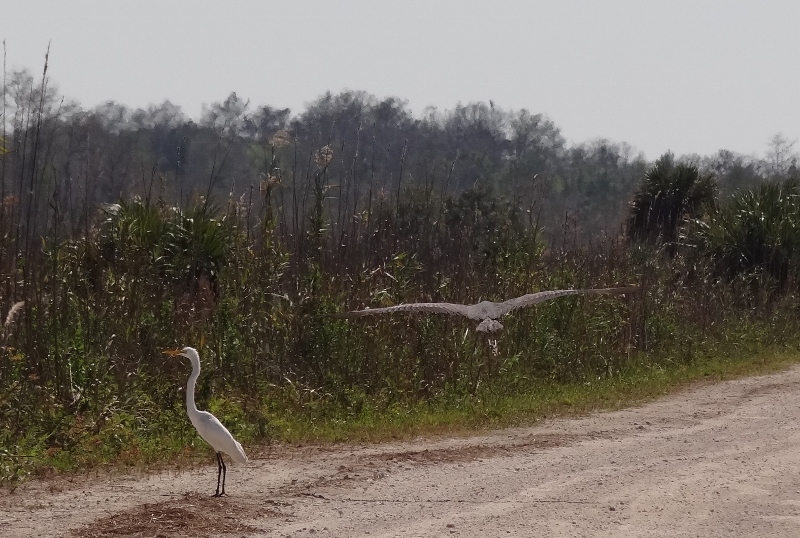
A great egret and great blue heron capture our attention
A great egret and great blue heron capture our attention


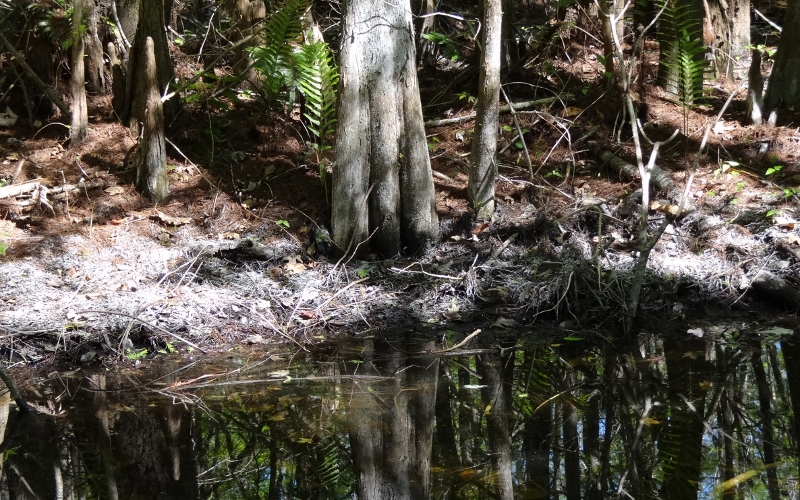
Not sure what the white stuff is- some sort of mold?
Not sure what the white stuff is- some sort of mold?


Our next stop
Our next stop


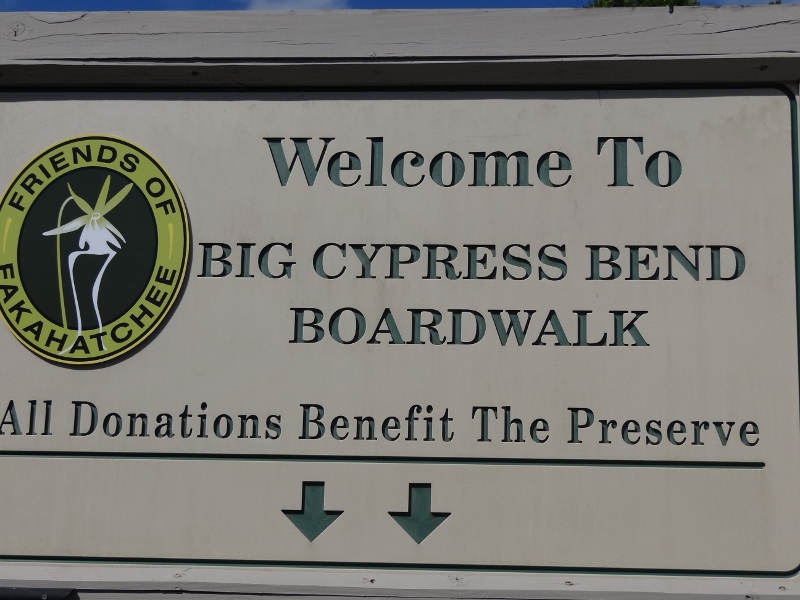
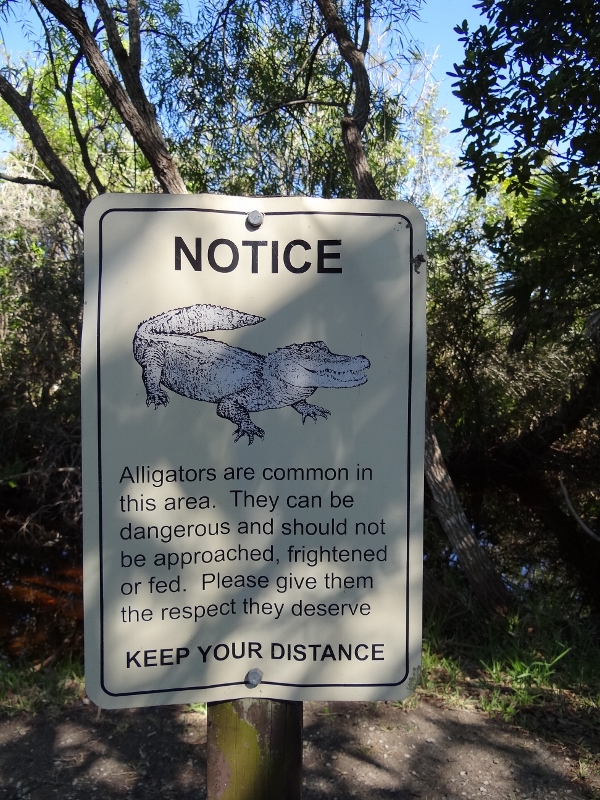
This sign appears at the start of the trail
This sign appears at the start of the trail


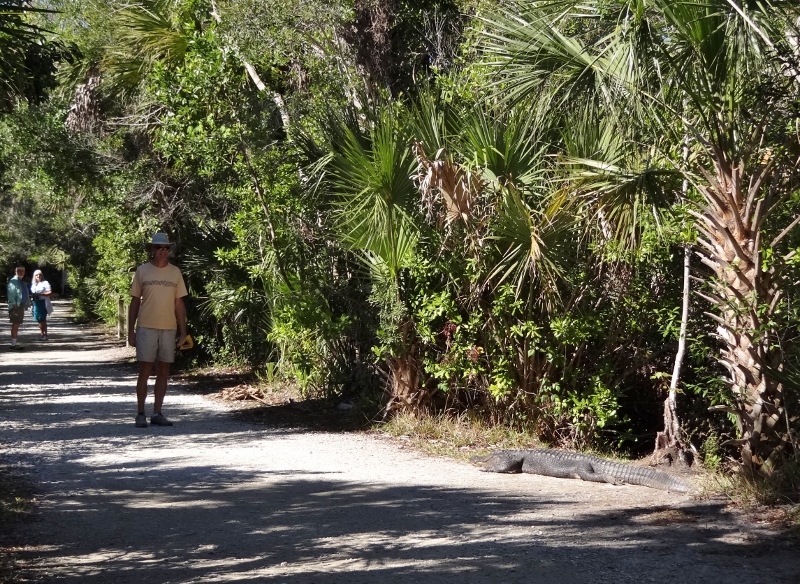
Now we know why. Russ wouldn't go closer.

Now we know why. Russ wouldn’t go closer.

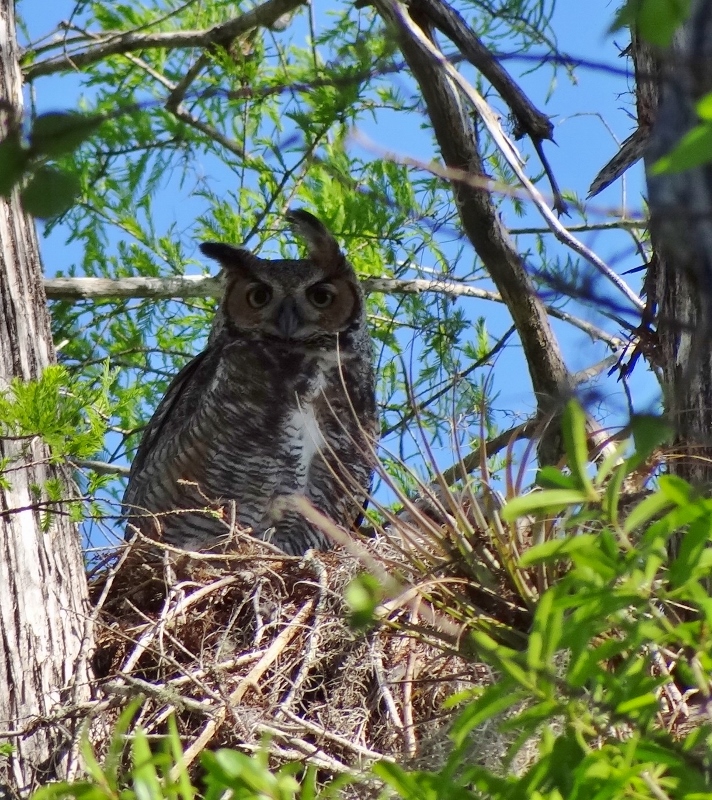
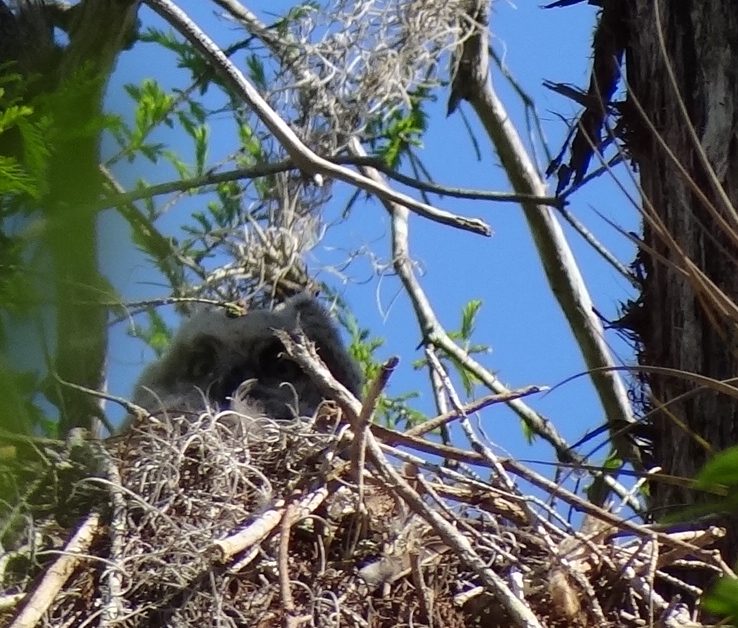
The Big Cypress Bend (I keep typing j instead of the d in Bend) trail is an interpretive one; signs are posted along the way identifying plant life, birds that could be seen etc. No sign was posted for this. Someone heard from someone else what to look for and the word gets passed along. This nest was quite some distance and many small branches and leaves blocked the view, especially from certain angles. We could sort of see a head pop up – oh it’s a great horned owl we heard and I said Ok but that’s a baby not the adult. So we managed to get a good shot and went happily on our way. Not until I loaded the photos onto the laptop did we see the bonus; that’s mama on the left and baby is in the nest. No one looking at the time realized the adult was sitting on the edge of the nest.

Another surprise. Great horned owls are rarely seen.

Another surprise. Great horned owls are rarely seen.

We liked this walk so much that we came back the next day; nesting birds are changeable we learned. This time we clearly see mama but not so much her chick. Our binoculars made the rounds as most don’t have them and seeing the owls was a big deal.
Who who is this!
Who who is this!


Baby horned owl's close-up

Baby horned owl’s close-up

A short ways down the boardwalk is a sign pointing out an eagle nest; the owners have been returning for 22 years. A tripod spot is even available. I did get a shot of mom or dad in the nest with jr, but it wasn’t well focused. The below shot we got on the return visit and even got to see the eagle in flight; assuredly gone hunting.
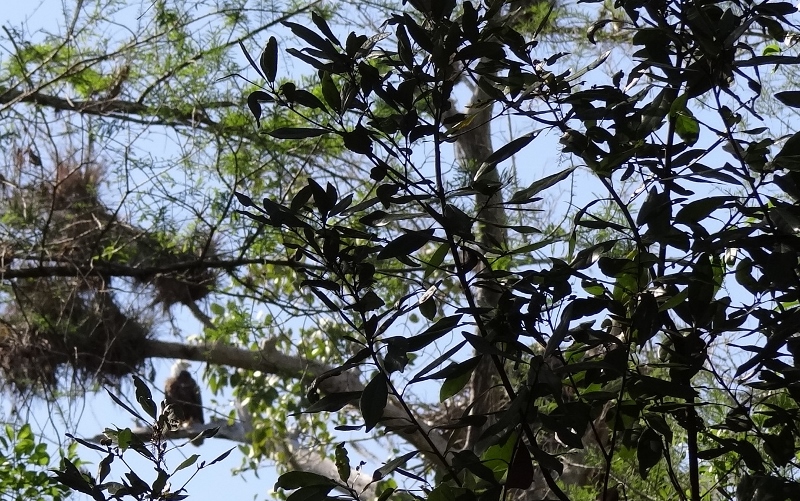
One of the adults sits on a branch; the nest is to the right
One of the adults sits on a branch; the nest is to the right


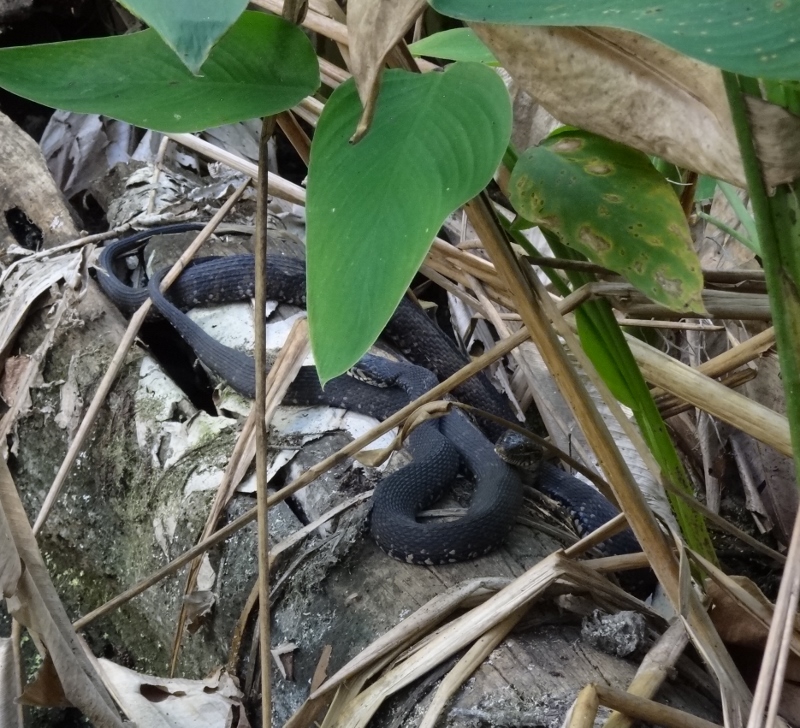
The only snakes we saw, not counting the deceased one in the road

The only snakes we saw, not counting the deceased one in the road

Our day ended at the Marsh Trail, about a 30 minute drive west from our campground, on Rte 41 in the Ten Thousand Islands Nat’l Wildlife Refuge. At the northern  border with no visibility into the islands, but with a large multi-level viewing platform that was perfectly situated. A side note- during the video we watched earlier Panther Key (one of the 10,000) got a mention and we smiled- we know that place:
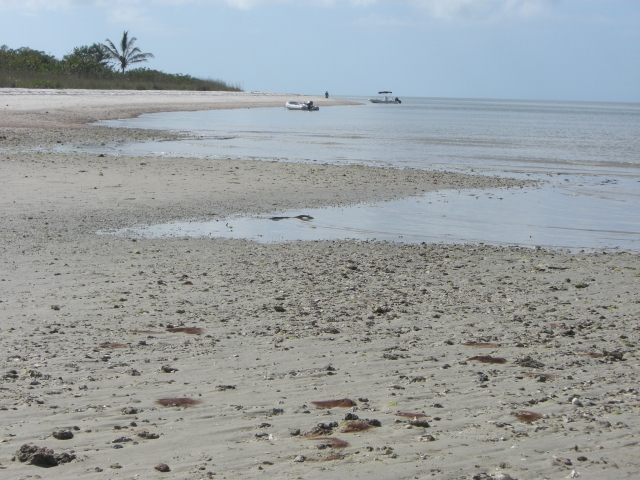
Panther Key- a stop in Feb 2011 aboard Ortolan
Panther Key- a stop in Feb 2011 aboard Ortolan


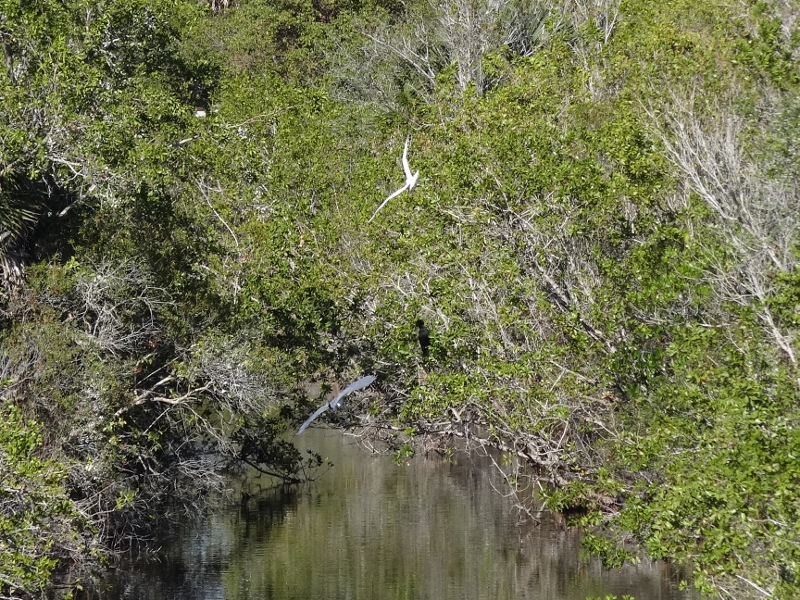
Egret and heron in flight. I am always thrilled to get an action shot

Egret and heron in flight. I am always thrilled to get an action shot


Sometimes I stop bird watching

Sometimes I stop bird watching

The large viewing platform sat about one-third of the way down the 1.2 mile path. Of couple other spots held promise but none this good. On our way back we checked out the view again and Russ went up ahead of me. As I came up the steps he called me over. This beautiful egret was the subject of a man with a serious camera; long fat lens, camo color, tripod and remote shutter. The owner invited me to take a look; yes I can see the difference between that and mine- like a million miles!!
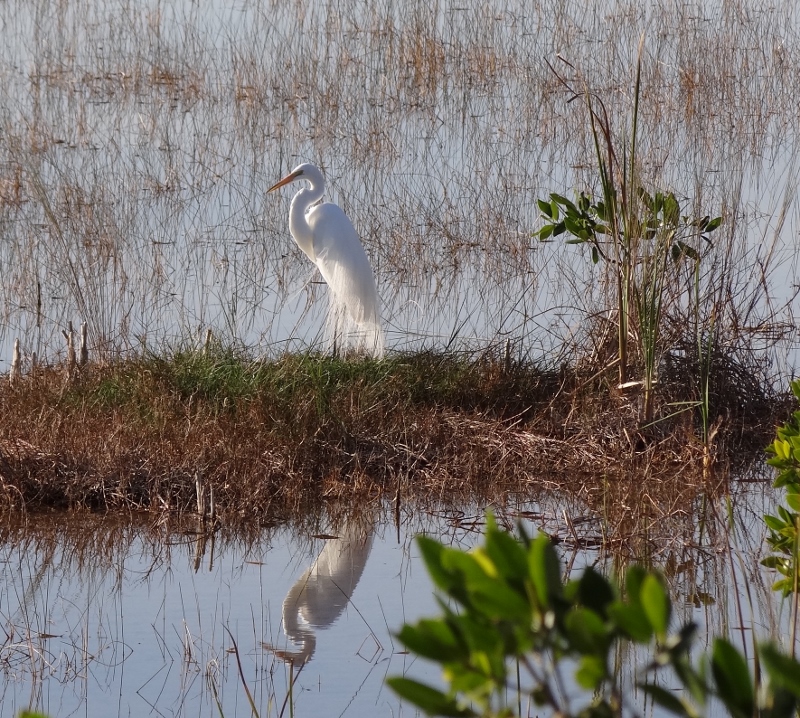
This great egret was a photographer's dream

This great egret was a photographer’s dream

We got to talking; I asked what he did with his photos. Only 10 mins earlier Russ and I were discussing that; who were these people with the super serious cameras and what did they do with the pictures? Personal use? Commercial?

Rick was very obliging as befits a southern gentleman and he gave me his name, FB and other contact info. Said when we were near Charleston (we will be) to contact him and if he could he’d take us to a great spot for fantastic birding. Told us some other good places in Florida and we shared about our owl find.

I snapped this after he’d run across the path to check on a possible better  bird.
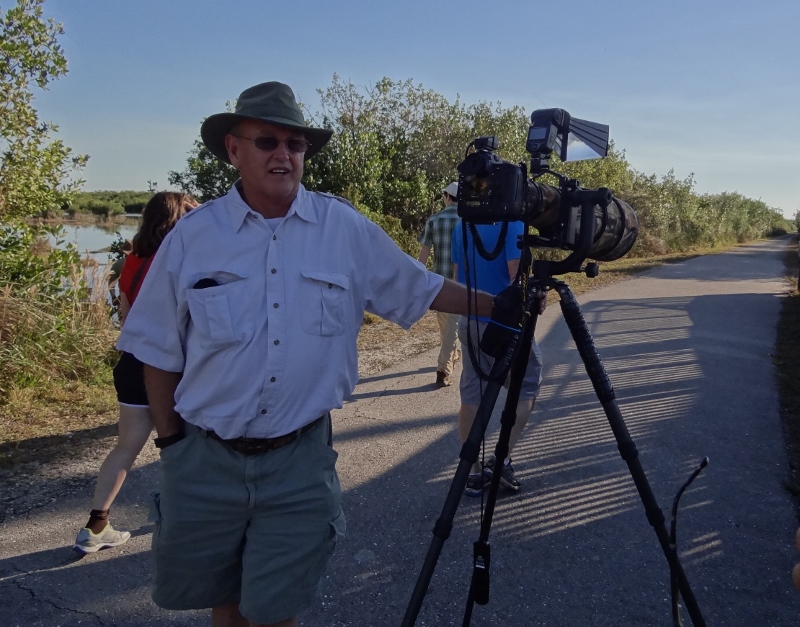
Rick Coakley amateur photographer from Charleston
Rick Coakley amateur photographer from Charleston


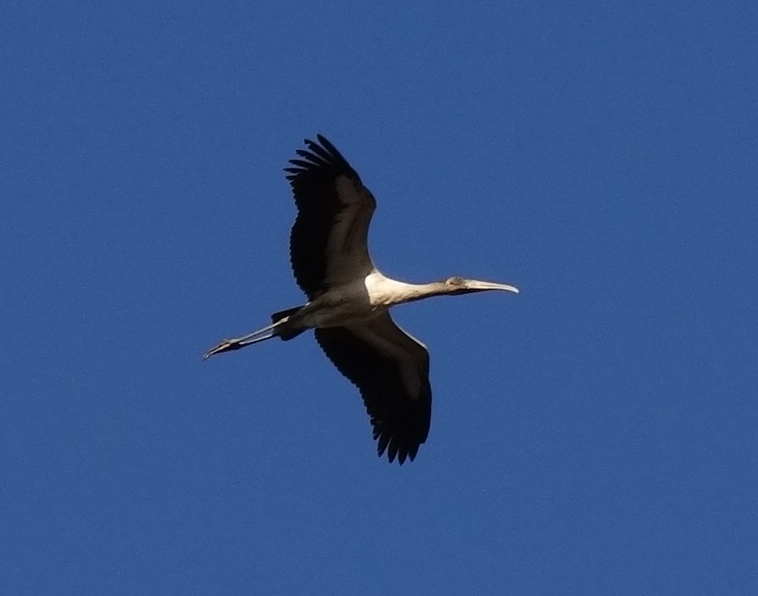
My parting shot- a wood stork in flight
My parting shot- a wood stork in flight
Adventure in the “River of Grass”

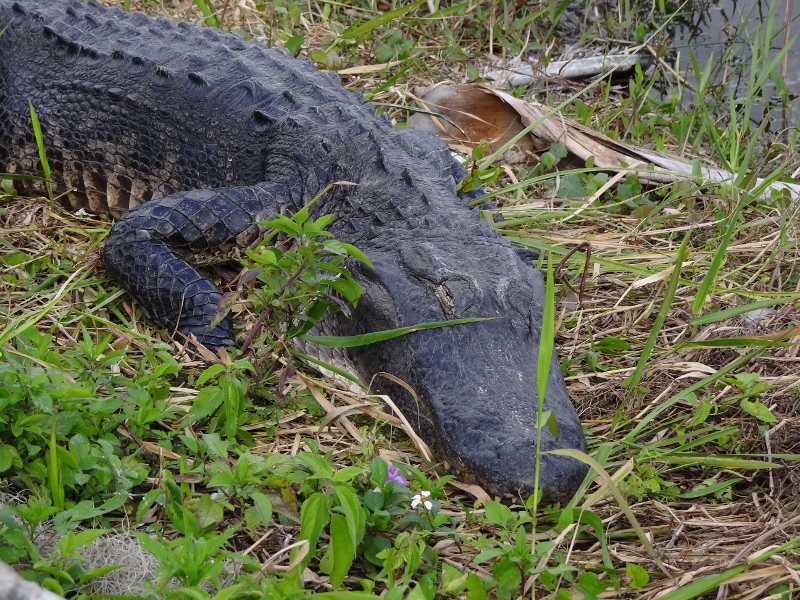
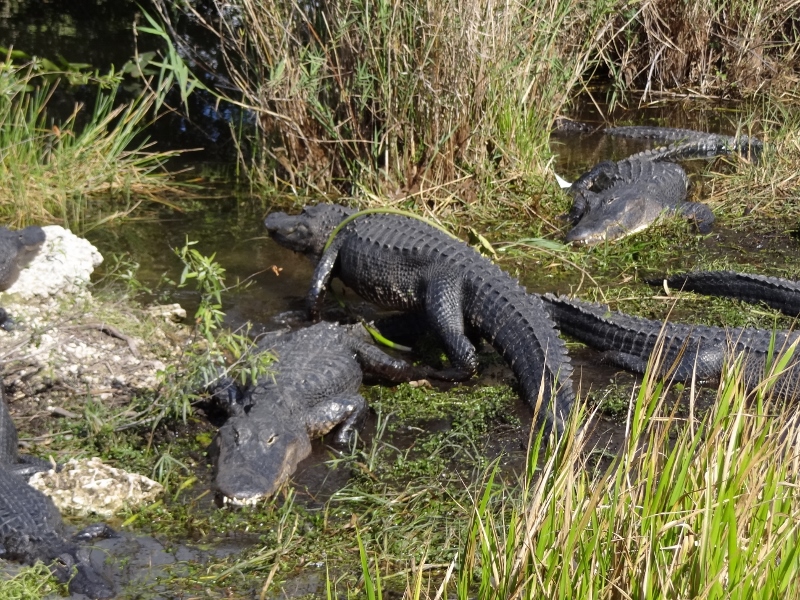
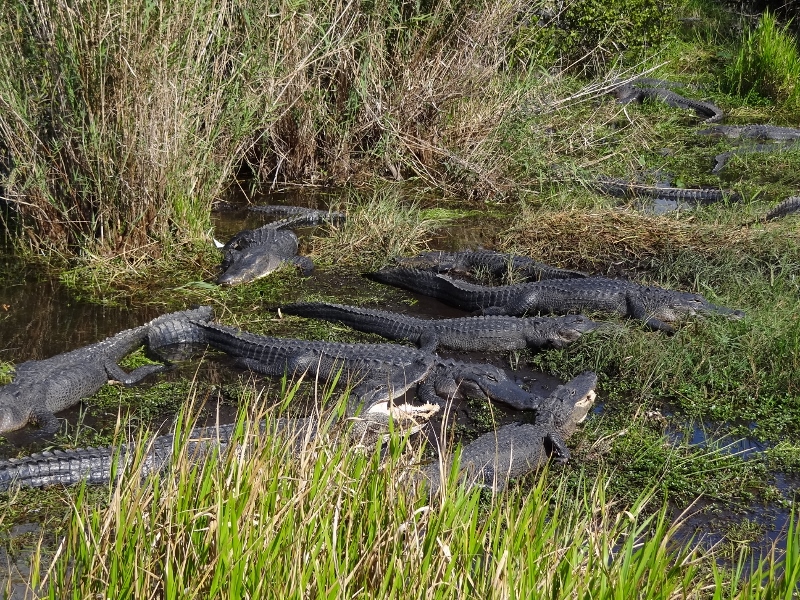
Gators lounge about in the sun along the Anhinga Trail

Gators lounge about in the sun along the Anhinga Trail

The Indians who sought sanctuary in the Everglades’ vast wilderness called it Pahayokee, the grassy waters. Conservationist author Marjorie S. Douglas in the 1940s called it the “River of Grass.” The early Spaniards named it the Lake of the Holy Spirit. No matter the name, the subtropical splendor of the Everglades continues to enchant its many visitors; be sure you are one.

However splendid, the Everglades remains threatened and in 1947 was the first national park created to protect a threatened ecological system. No park elevation tops eight feet above sea level and while the river still flows slowly toward bay (Biscayne) and gulf, the threats to it and the entire region moved quickly toward its destruction. Amazingly, the region’s only source of fresh water is the rain that falls on it, which would be enough if people hadn’t intervened. Extensive canal and levee systems now shunt off much live-giving water before it reaches the park.

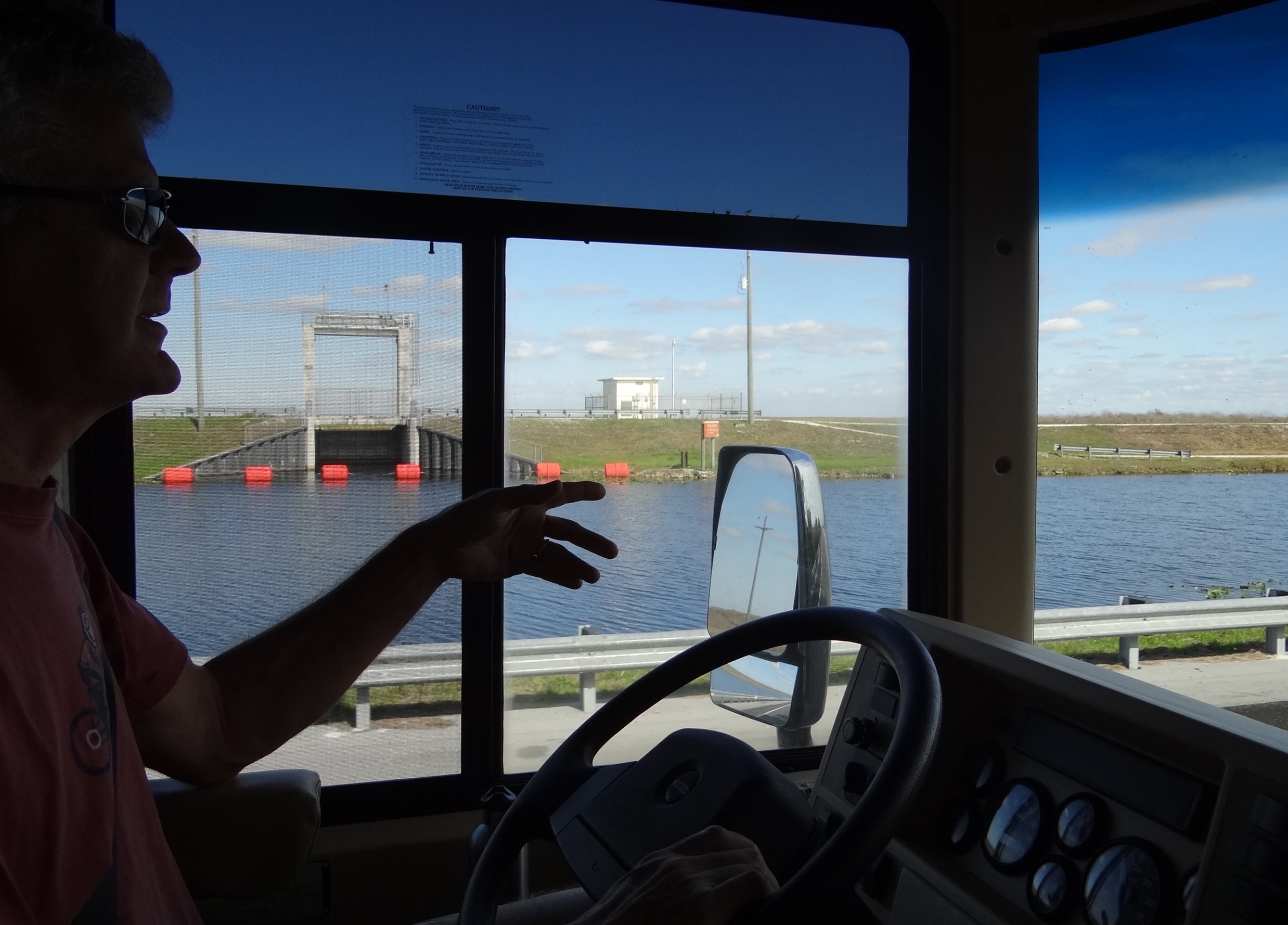
Water level control canal parallel to Tamiami Trail, northern park boundary

Water level control canal parallel to Tamiami Trail, northern park boundary

Pollutants add to the problem and high mercury levels haunt the entire food web. The Florida panther is so endangered that not even 10 are thought to live in the park.

Fortunately, efforts to save the remaining Everglades and to restore a semblance of their original function are in progress. In 1989 Congress extended the eastern park boundary to protect the Shark River Slough (say, Slew) which is critical to sustain the park’s historical abundance and diversity. Soon after, Congress authorized the world’s largest environmental project which requires 30 years to accomplish and seeks to return water to more natural patterns of quantity, timing and distribution. We heard of one aspect of this being 12 miles of bridge that allows water from the canal alongside Tamiami Trail to flow into the glades and that only one mile so far was complete. We drove over it on our way west after Southern Comfort and yes only a mile and the stretch is more like a raised causeway with large pipes underneath.

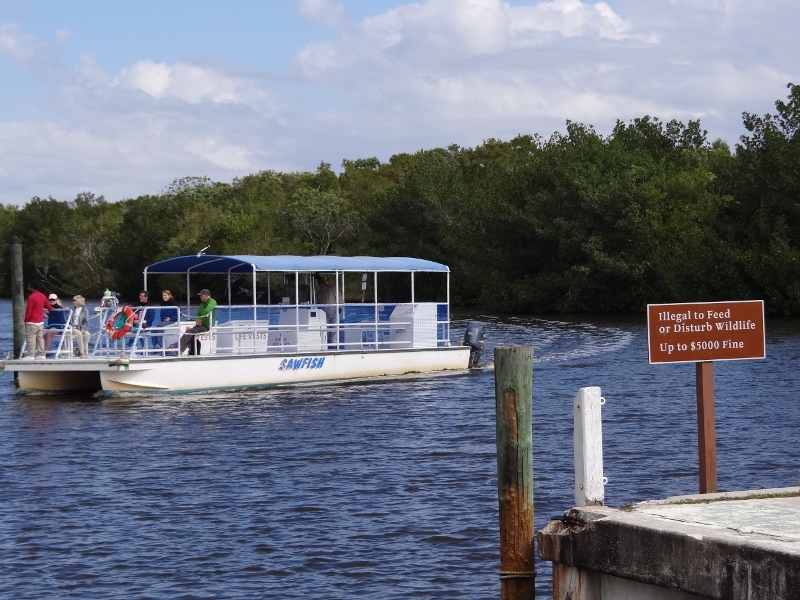
We wait at the marina for our turn on the tour boat

We wait at the marina for our turn on the tour boat

Our second day of grassy water adventures began with a nearly two-hour, two-mile backcountry boat tour up Buttonwood Canal, into and across Coot Bay, through short Tarpon Creek then finally peeking out briefly into Whitewater Bay. Darn good thing the camera had a full charge.

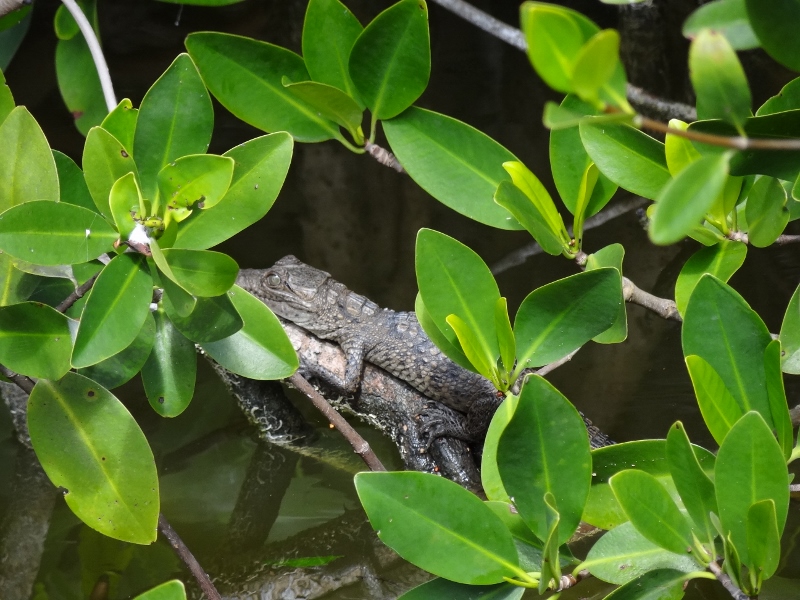
Mangroves offer baby gator needed protection

Mangroves offer baby gator needed protection

Captain Steve and his assistant Sedgwick worked well as a team with Sedgwick as spotter. Amazing how he could see this tiny gator tucked into the mangroves. Captain Steve would maneuver the boat close in so we could take our pictures, but first we had to see the darn thing and that took some doing. Mama gator gets no prize for Mother of the Year as she usually doesn’t tend to her young for more than a few months, unlike crocs who take on the challenge for a year.

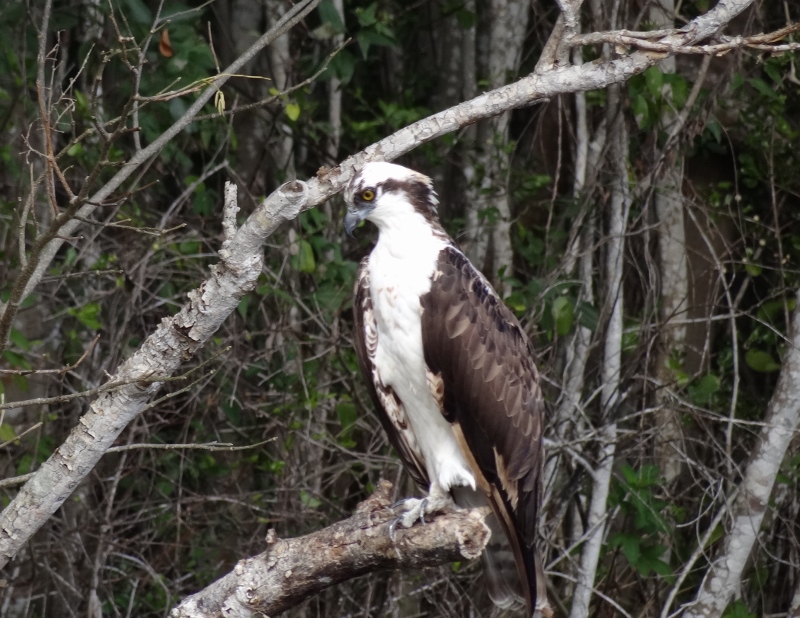
Osprey was easy to photograph on the edge of the Buttonwood Canal

Osprey was easy to photograph on the edge of the Buttonwood Canal


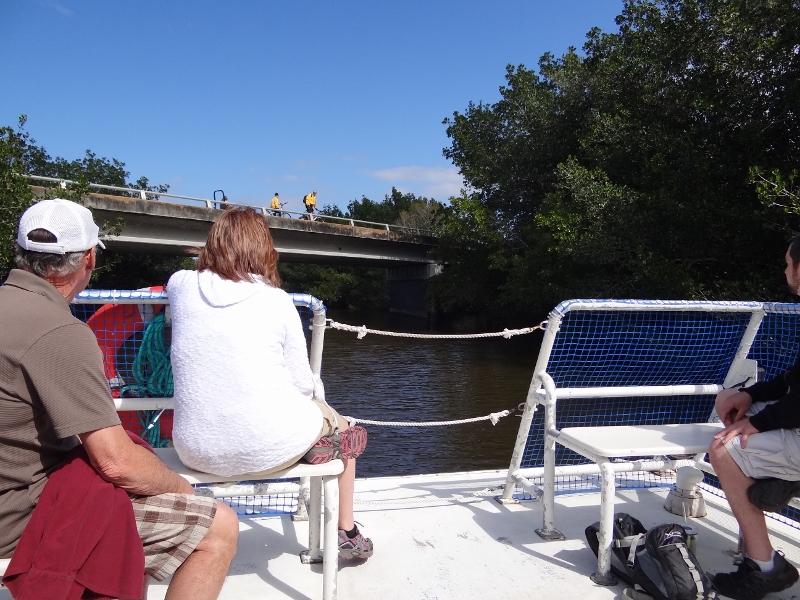
Hurricane Andrew (?) raised water levels up to the bridge

Hurricane Andrew (?) raised water levels up to the bridge

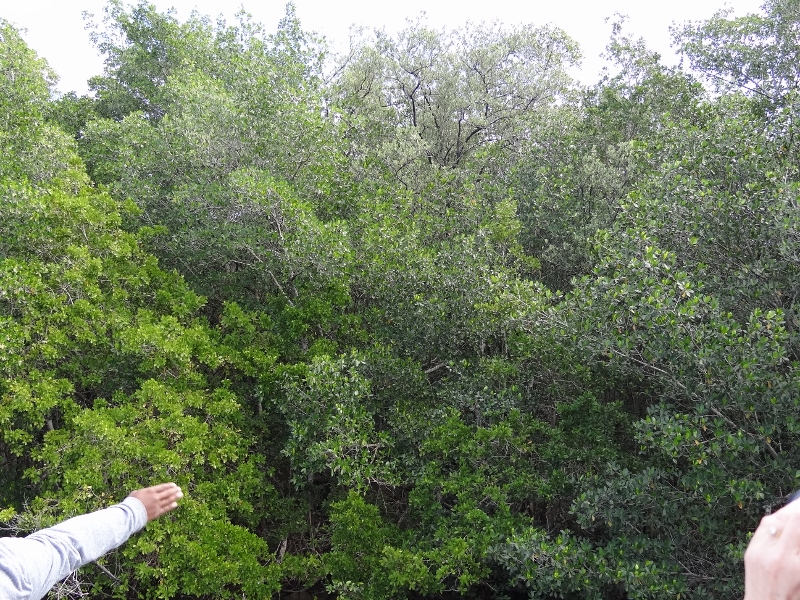
Although we have read, heard and seen plenty about mangroves I still can’t keep them straight. Here we had the rare opportunity to see all three together. The red mangroves are sneaky, the white outer bark covers their distinctive red underneath.

Mangroves 101: black, white and red as you look left to right

Mangroves 101: black, white and red as you look left to right

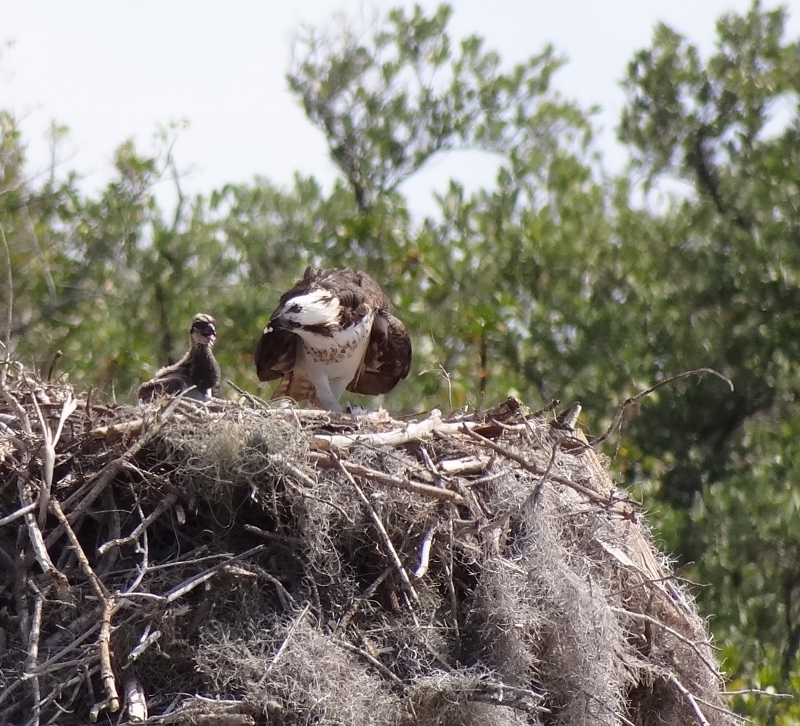
Back at the marina we checked on the osprey nest. Baby was born at the end of January so was about two weeks old. What a difference a day makes; this chickie was noticeably more active and demanding today.

One day older and eager to eat

One day older and eager to eat

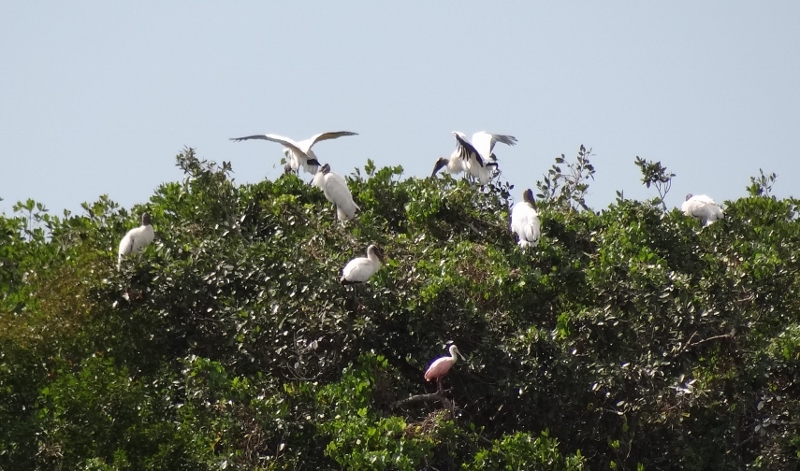
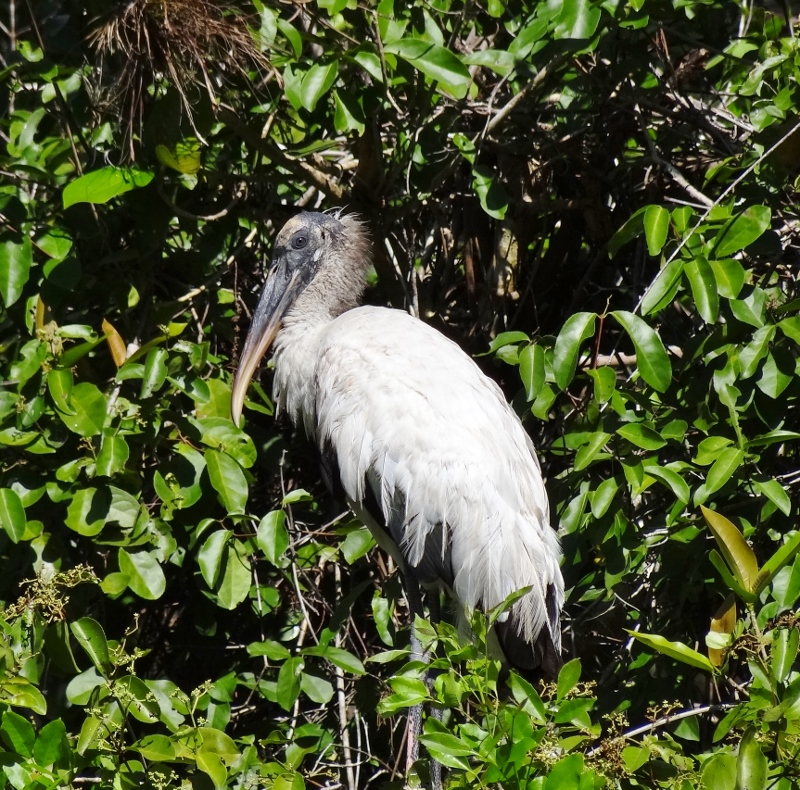
A stop at Paurotis Pond to find wood storks and roseate spoonbills was successful but they hung out in trees on the pond’s far side so my pictures are only so-so. I’m also including a better one taken elsewhere here so you can get a good look.

Wood storks and one roseate spoonbill

Wood storks and one roseate spoonbill

Wood stork- in a tree

Wood stork- in a tree

The endangered wood stork is considered an indicator species. This dramatic wading bird, its plunging population decline and painfully gradual rise as restoration efforts prove successful, is noteworthy. How it feeds explains why. Wood storks feed not by sight, but by touch or tacto-location, in shallow, muddy water full of plants where the fish can’t be seen.

Walking slowly forward, the stork sweeps its submerged bill from side to side. Touching its prey, mostly small fish, the bill snaps shut with a 25-millisecond reflex action, the fastest reflex known for vertebrate species. Only seasonally drying wetlands concentrate (winter is the dry season) enough fish to provide the 440 pounds that a wood stork pair requires in a breeding season. When human water management upsets the natural wetlands cycles, wood storks fail to nest successfully.

A Louisiana Heron or Tricolor as its commonly known

A Louisiana Heron or Tricolor as its commonly known

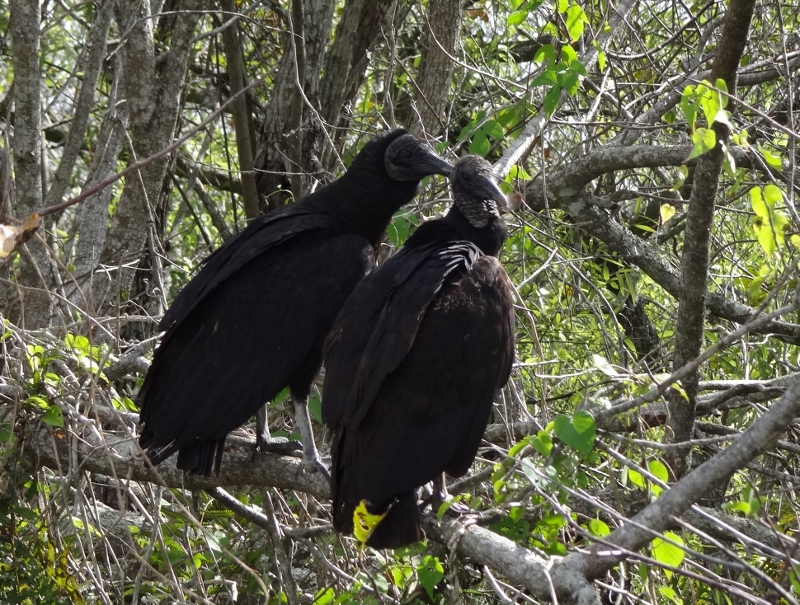
We ended our day with the gem of the park (IMO), the Anhinga Trail, which is mostly boardwalk. We’d read about the vultures attacking car tires and wiper blades and sure enough, here we found the first warning sign.

Bring wet towels or tarps to cover up if you are worried

Bring wet towels or tarps to cover up if you are worried

So what do you want to do today?  Chew tires?

So what do you want to do today? Chew tires?

Located at Royal Palm about two miles from the park entrance and HQ, the half-mile Anhinga Loop Trail and its sister trail, Gumbo Limbo are worth the price of admission alone. They offer the best opportunity to view wildlife up very close. Royal Palm is fully equipped with ample parking, restrooms, several info kiosks and souvenir shop you can also join one of the several ranger-led talks throughout the day. We joined one near the end and highly recommend it if you have the time.

Immediately as you walk to the area right behind the buildings, where to look first is the question. Pond, marsh-lined narrow and shallow water areas next to the wide walking path, trees, shrubs, palms and more grassy water as the boardwalk begins and leads you out into the very much alive marsh.

The eye just cracks open- I see you

The eye just cracks open- I see you

This guy above rested about 3 ft off the trail with only a tiny wall separating us. A 20-something girl approached with her BF, looked intently and stated that no way he was real. But then he opened his eye. Kids need to get out of Disney, video games and into real life!

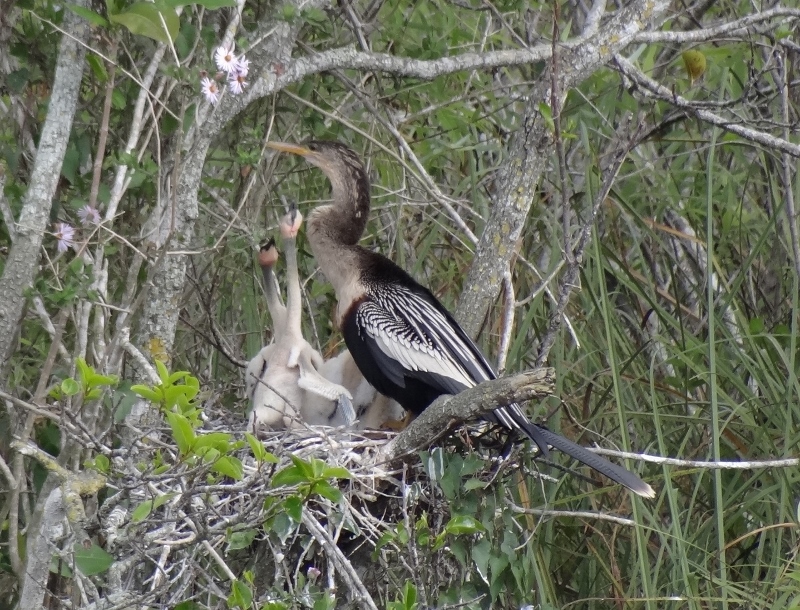
I didn’t realize when I took this photograph that the adult anhinga was in her nest with young ‘uns.  Acting hungry I’d say. So where is dad?

Mama anhinga and her kids

Mama anhinga and her kids

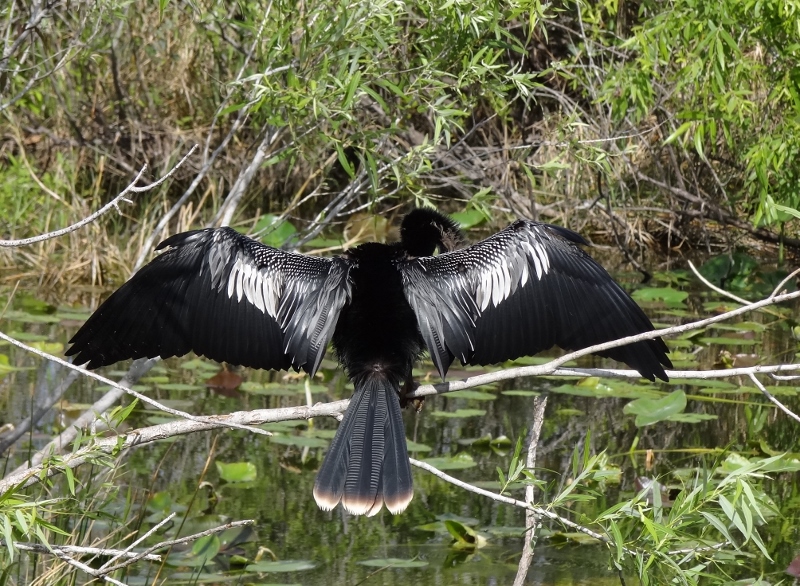
The anhinga is similar to the cormorant but the neck is snakier, the bill pointed, the tail much longer and the very large silvery wing patches make it easy to tell it apart from the more pesky, unattractive cormorant. The female has a buffy neck and breast. Not sure if we’d ever seen one before our Everglades visit.

Dad strikes the usual drying-out pose

Dad strikes the usual drying-out pose


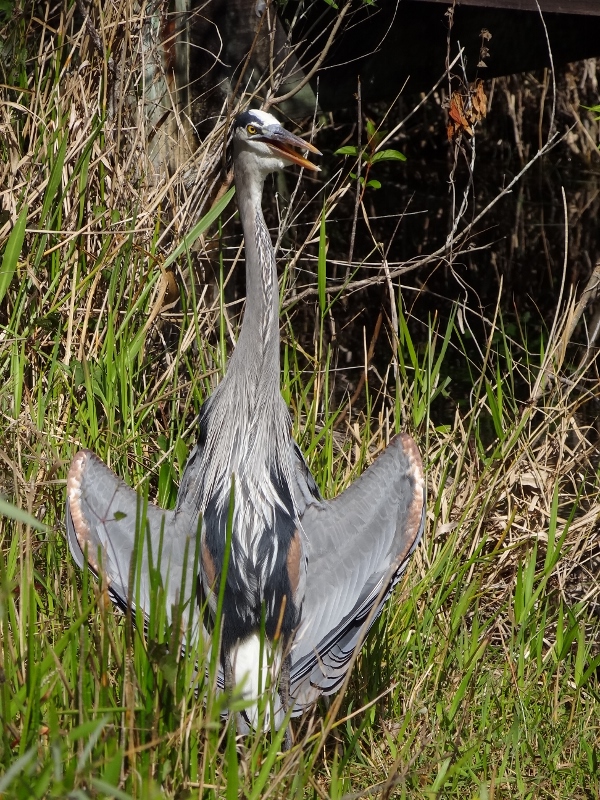
This great blue heron was putting on quite the show. Throat pulsating too.

This great blue heron was putting on quite the show. Throat pulsating too.


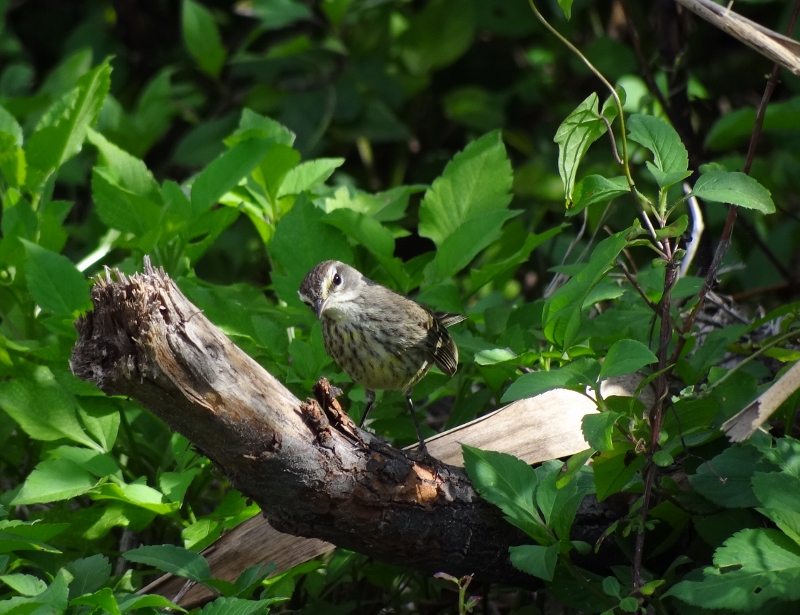
This warbler was the smallest bird we saw in the park

This warbler was the smallest bird we saw in the park


Oh don't move, I'll just crawl over you

Oh don’t move, I’ll just crawl over you


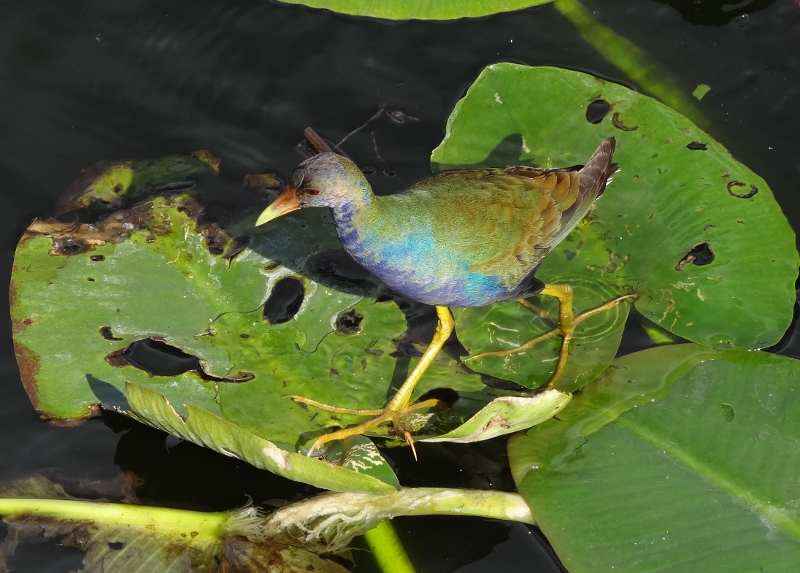
Purple gallinule- duck like swimmer, lily pad walker

Purple gallinule- duck like swimmer, lily pad walker

Look at those feet; just perfect for walking on water. He also did a great job of using his bill to lift up the edges looking for a snack. Superficially duck-like except for smaller heads, forehead shields and rather hen-like bills, gallinules swim, wade and climb bushes.

This gives you a good view of the beauty along the boardwalk

This gives you a good view of the beauty along the boardwalk


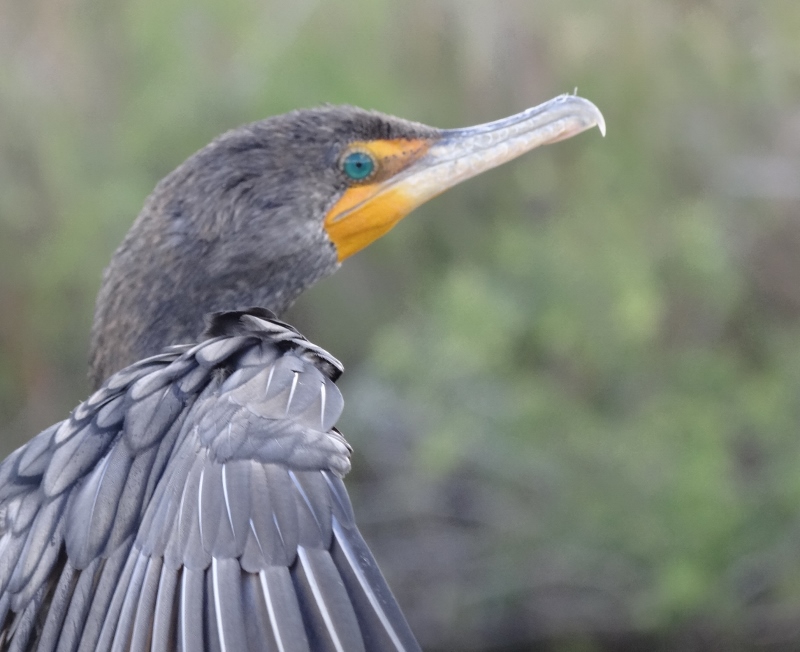
The cormorant has awesome blue eyes; beauty here after all

The cormorant has awesome blue eyes; beauty here after all


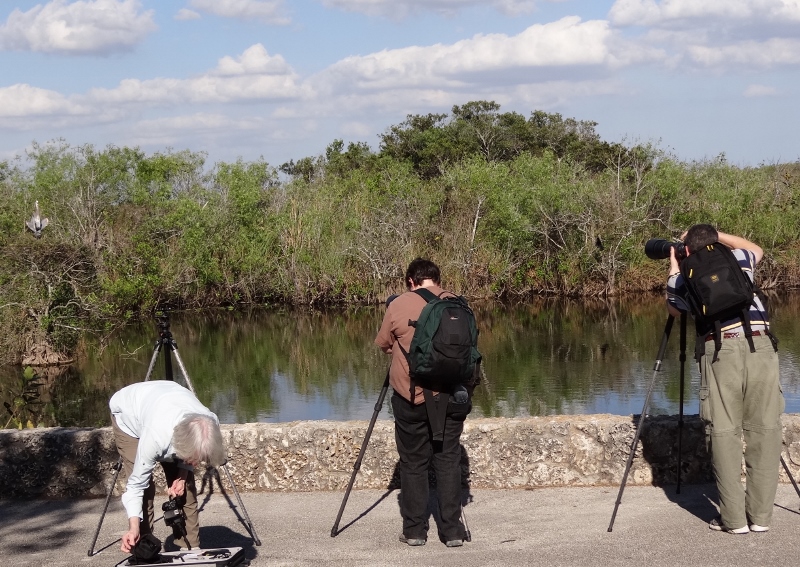
This got to be a common sight especially when the subject kept still

This became a common sight especially when the subject kept still


The photographers' subject- a great blue heron showing off

The photographers’ subject- a great blue heron showing off

I hope you liked the Everglades tour, liked as in “like” it if you did and wouldn’t mind tossing your camera toting, stiff-necked tour guide a bone for all her efforts- the most difficult being choosing the photos to include here.

Our next stop after leaving SoCo RV park in Florida City will be Trail Lakes Campground, an even more rustic park on Tamiami Trail where we had a spot on a small pond…. more birds!!  We explore Big Cypress Preserve and others. Stay tuned for a rare sighting as we get lucky with so many large birds nesting.