
 The Farmers Market in Charleston is one of the most varied & scenic.
 Ohhhh … will this just buff out? While docked at Beaufort, SC we were jarred out of our sleep at 6 AM by a BAMM! then a serious of crashing & grinding sounds! Our “fire drill” response wasn’t very good as it took us over a minute to put on some clothes & find flashlights. Outside we saw a boat smashed sideways against our bow in the strong current gunning their engine in an attempt to detach! From the horrific sounds, we were sure we suffered serious structural damage to our entire bow(s), anchor chute, stainless steel railings, etc., but I guess we were fortunate. It will be a bit difficult to repair though, as our faded yellow gelcoat will be tough to color-match.
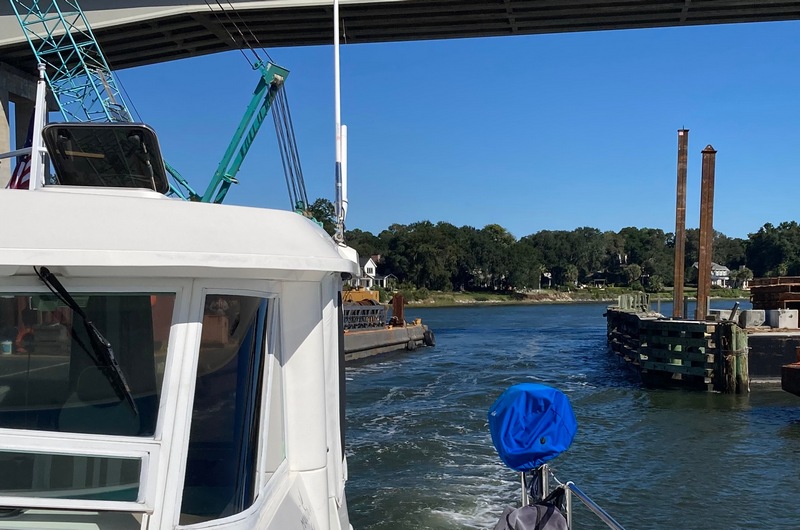 Squeaking thru … this bridge near Savannah has been recently replaced, but they are already adding a 2nd new one. There was a barge working right in the opening reducing the horizontal clearance to only 30′ & we are 21′. Technically, lots of room, but …
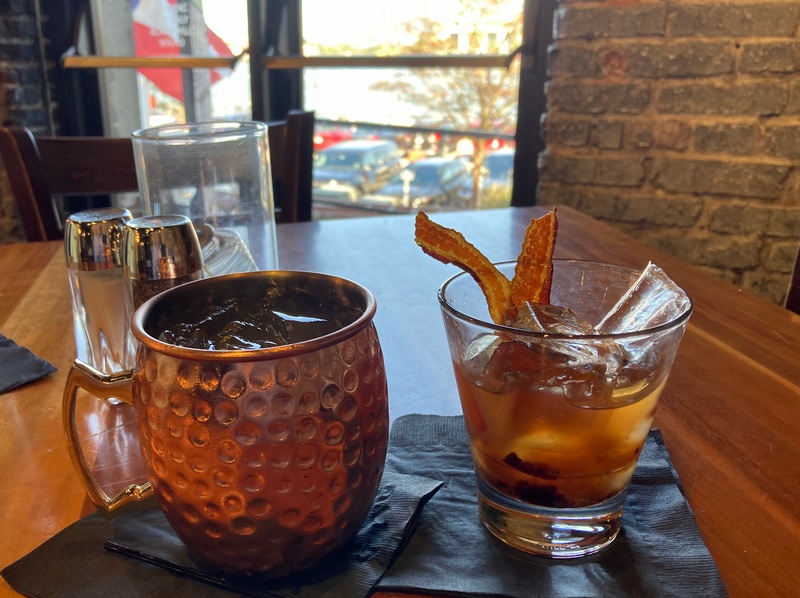 We haven’t visited downtown Savannah in a couple of years. We almost stayed at a new marina right downtown (and mostly protected from the ship wakes), however with their 24-page contract & requiring copies of all vessel paperwork, insurance & drivers licenses, simply for a 2 night stay (along with high dockage rates) discouraged us. Instead we stayed at a marina on the ICW & rideshared in as usual.
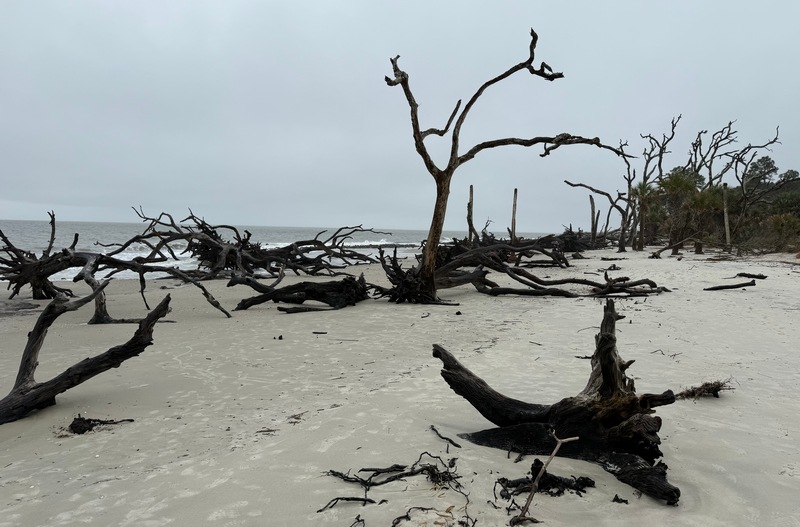 An eerie pic of Driftwood Beach on the north tip of Jekyll Island, Georgia on a cold, 55-degree day.
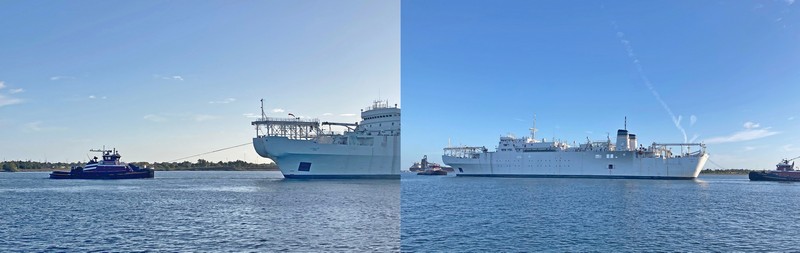
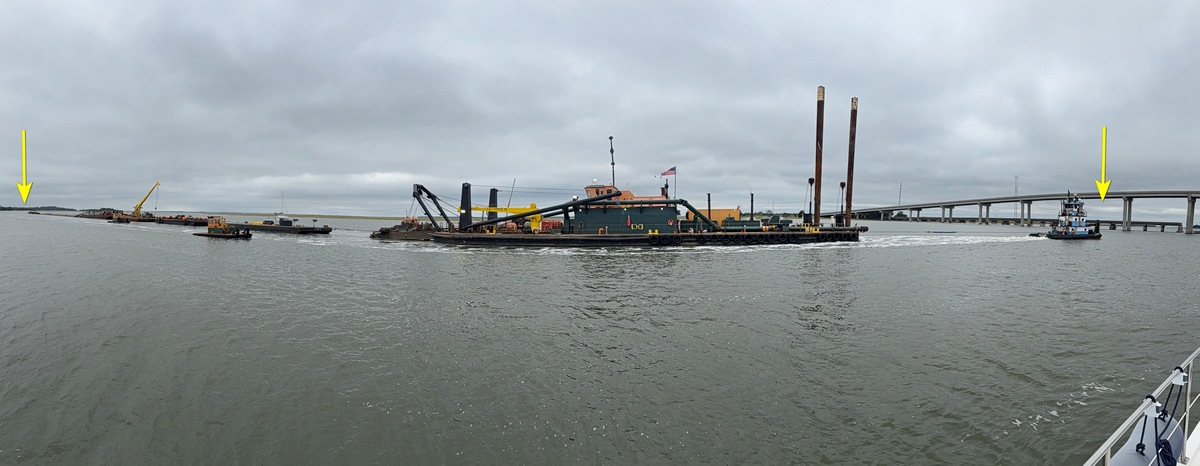 A parade of a dredge, barges & 1,000′ of pipeline all being towed by a single tug on the ICW at 2 knots. The arrows show its entire length – fortunately we were docked & not needing to get past.
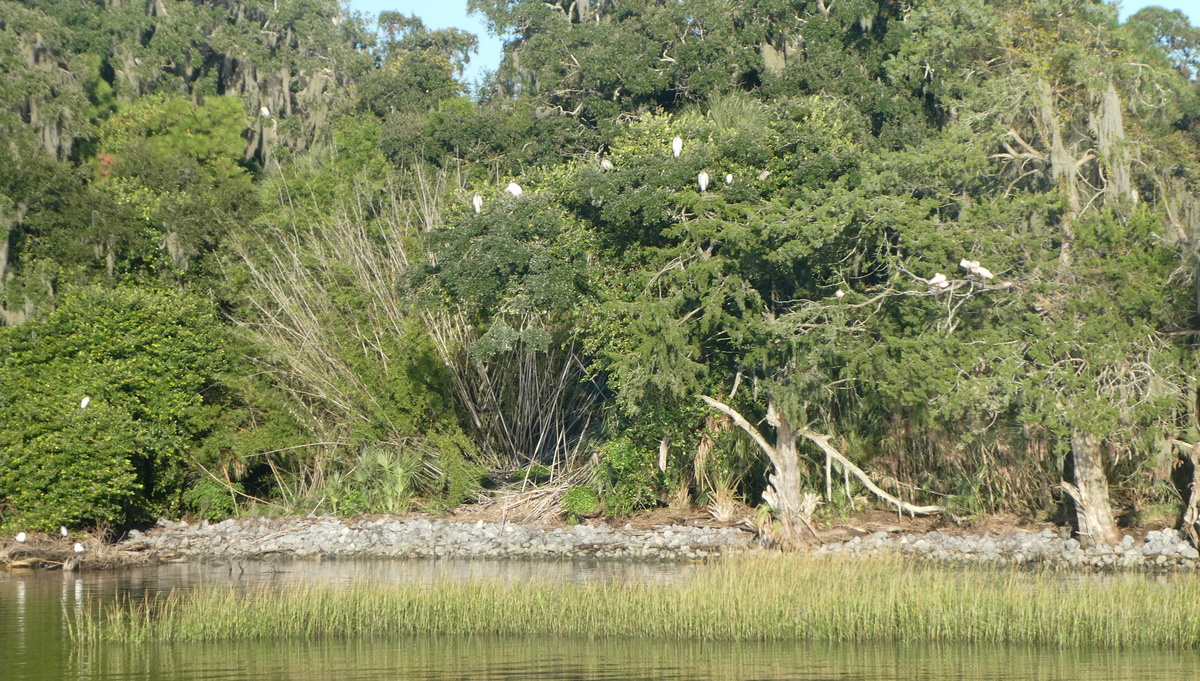 Our annual favorite “waiting room” anchorage off Cumberland Island, Georgia before our insurance will allow us to crosss into Florida. The assortment of birds change hour to hour depending on feeding habits, tide, sunshine & temperature.
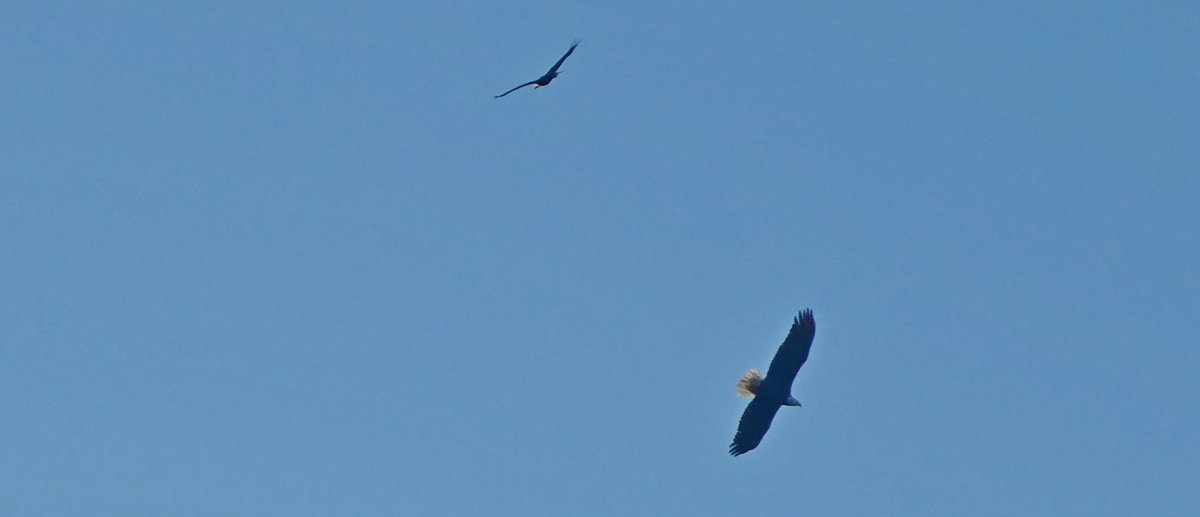 We typically see a bald eagle just sitting majestically at the top of dead tree. Here 4 bald eagles were soaring overhead for almost an hour (occasionally landing in a tree) with lots & lots of vocalization – a first.
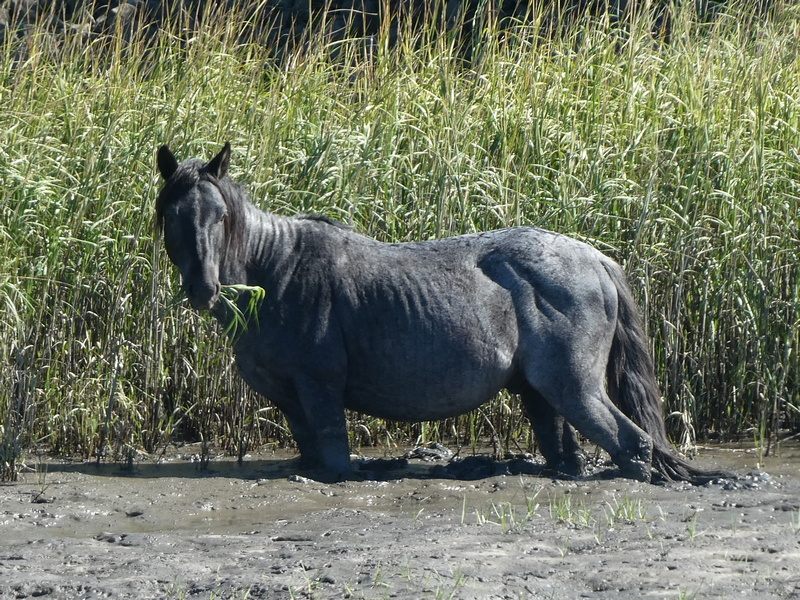 Our wild horse grazing in the muddy bank next to us. We learned a few years ago that even though it seems they’ll certainly get struck in the mud, they effortlessly just step out when done eating.
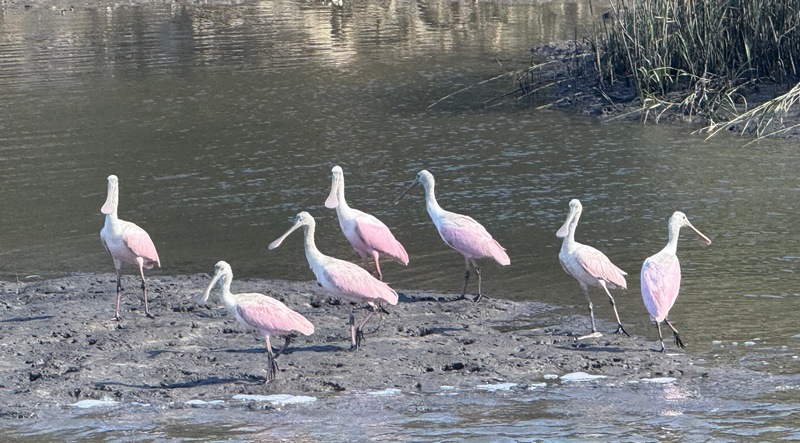 Roseate spoonbills are our favorite. They comically waddle around sweeping their bills back & forth looking for tasty bites in the shallows.
After November 1st, our insurance company deems Florida to be hurricane-safe(?) so we can officially cross the Georgia/Florida line. As last year, we’ll stay a week in Marineland, visiting St. Augustine & the area by car. We’ll then spend a few weeks in the Vero Beach area bouncing between marinas & anchorages, as we work on our Bahamas prep and provisioning. With the Bahamas continually increasing their immigration requirements & fees, we keep saying this will be our last Bahamas year, but ahhh … that beautiful blue water …

 Cruising along the East Coast and Bahamas