The Rule of Three

Why is it that we look for things to happen in threes?  Or stop counting after three, as in “testing, one, two, three”? Throughout the ages three is held in high regard in religious, spiritual, mathematical and daily life. Braids have three sections, Goldilocks and the Three Bears, the Holy Trinity; you get the idea. Three is also the largest number written with as many lines as the number represents.

Our dock neighbors, Todo Bien have completed their set for the summer. Was kinda weird how each successive event was more worrisome than the previous.  First event was a mystery visitor who opened the canvas and set himself down at the cockpit table for lunch, leaving lettuce scraps and faint scratches on the table. Like most people, they keep their boat, a Four Winns, tied stern-to at the dock for ease of entry and socializing. After that, I noticed the cockpit table top got stored below when they left the boat.

A few weekends later they headed out further than they typically go, to New London. They joked when leaving that if they didn’t come back, to come look for them. The trip out was uneventful; however the trip back became “event #2”.  The Thames was busy that day, the day after the huge fireworks display and Todo Bien somehow lost the use of one engine. Limping back toward Old Saybrook and the mouth of the CT River, they kept closer to shore to shorten their traveling distance.  Bad idea. Somehow they managed to confirm the location of a charted rock and that took out the second engine. Didn’t hole the boat though. SeaTow brought them back home safe and more than a bit shook up.  On Monday the marina work boat came to bring Todo Biento to the travel-lift well and a week later brought her back all shipshape.

Back home- finally.

The big question was, would they be able to get back up on that horse again?  Of course. Boat ownership is costly enough without letting yours languish in the slip.

The following weekend we see owners and guests preparing to head out, most likely to Hamburg Cove. Roughly two hours later the VHF comes alive with some frantic sounding words, the local Fire & Rescue crew comes hurrying down the dock and we see a power boat zooming into the marina, clearly not obeying the no-wake signs. But hey, isn’t that the Essex police boat behind them? Uh oh, sure enough Todo Bien is heading for the fuel dock, which has become crowded with marina and rescue crew, pump out boat crew and curious boat folk.
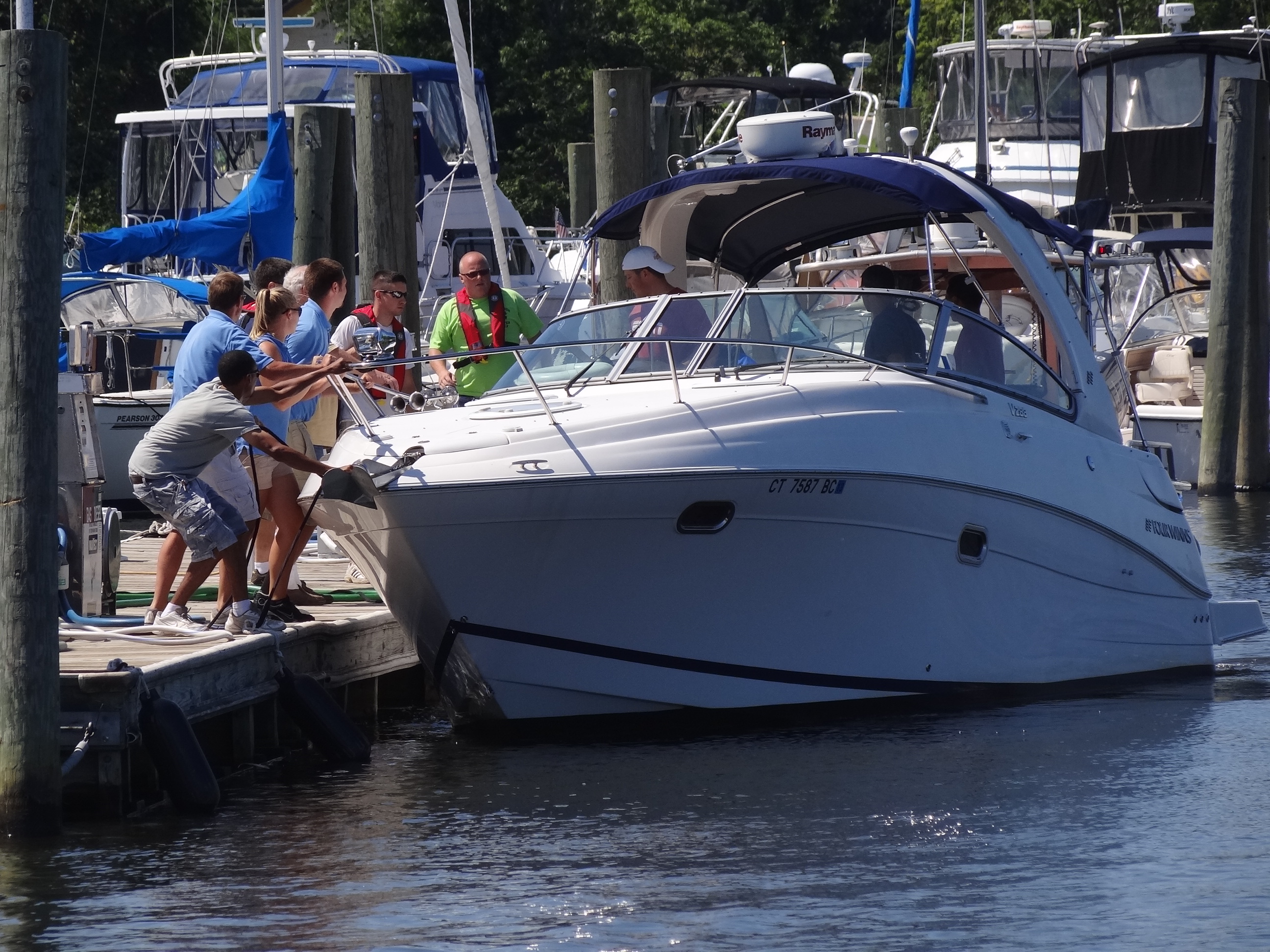
All hands help bring her in.
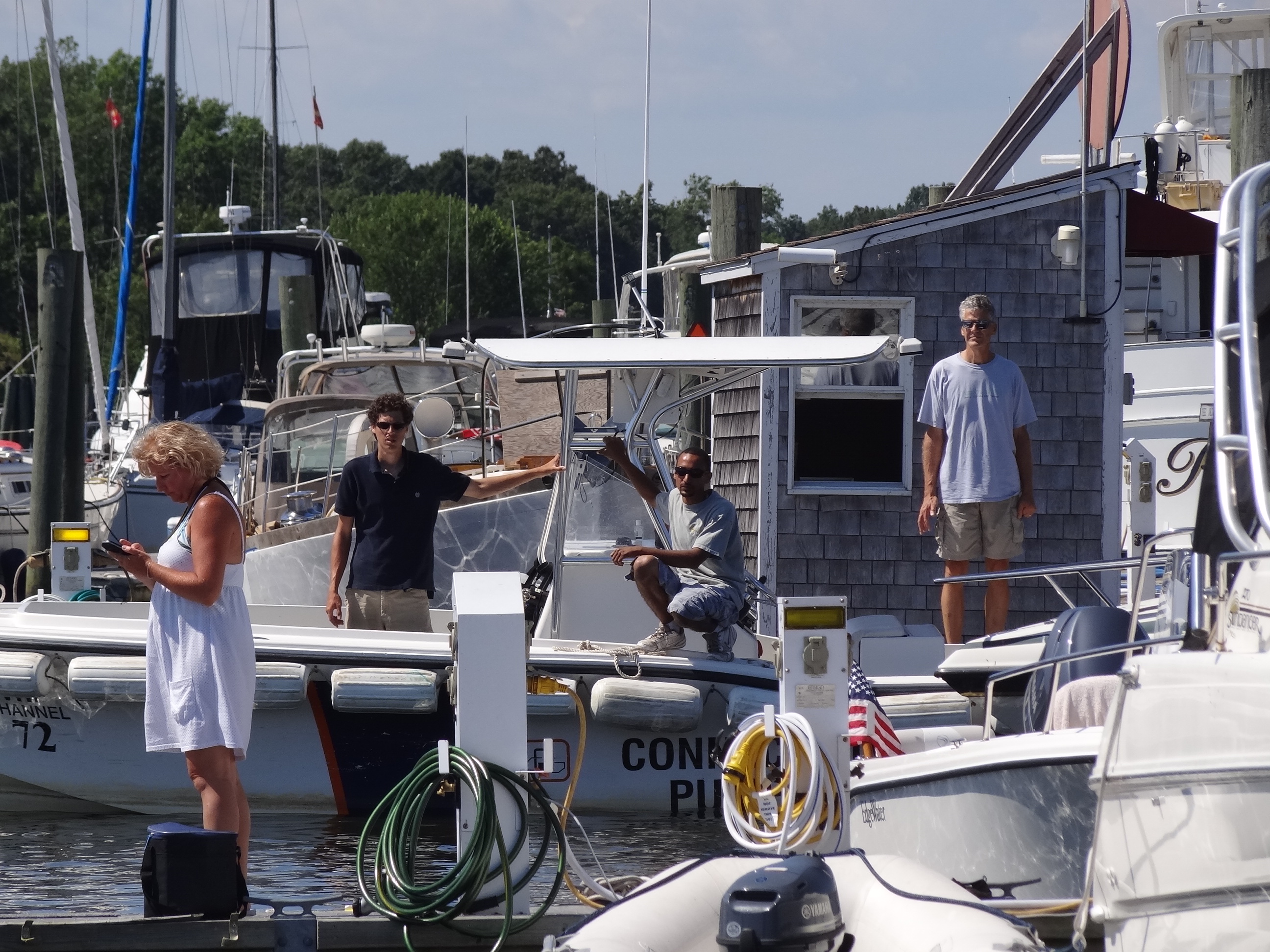
Russ goes to talk with Benj- POB waits to off-load

Turns out that the owner’s wife was not fully recovered from pneumonia and, well you know what can happen when you over-do it too soon. I’m sure that outing will remain memorable for all passengers for quite some time. As though to prove the “rule of three” stops after three, Todo Bien went out for a week to Mystic and Greenport (places we love), returning with no tales of woe; even the weather cooperated. Amazing.

Sew what?

I enjoy a love / hate relationship with my Sailrite LSZ Ultrafeed sewing machine. I love that we’ve (my trusty helper and I) been able to undertake a whole bunch of sewing projects, on our time schedule and not have to pull out kitty’s ears to do it. (cruising kitty- get it?). I hate that it’s like a third anchor and we can’t store it near the bow. We need to move weight toward the stern because the boat tends to be bow heavy.

Dinghy chap lower hem cover strip- heck I don’t know what to call it, but let’s be clear on this; it’d better do its job because we are done messing around with these chaps (no, not our dock neighbors!). The solution to end all solutions was this: sew Velcro to the outside of the bottom hem of the chaps (or, as our next dock over neighbor says, “dinghy condoms”) from the stern to just before the bow curves up. Glue a 3” wide strip of Hypalon to the dinghy with “hook” Velcro sewn at the stop edge; the bottom glued to the dinghy. And voila! A hermetically sealed, water impervious covering over the bottom hem; we can only hope that this will keep the water out.  Initial tests are encouraging- no water mon, but we’ll claim victory after we’ve achieved dry runs in Elizabeth Harbour, George Town Bahamas.

Velcro sewn on to bottom edge of chaps

Hypalon strip with Velcro sewn. The exposed Hypalon gets glued to the dinghy.

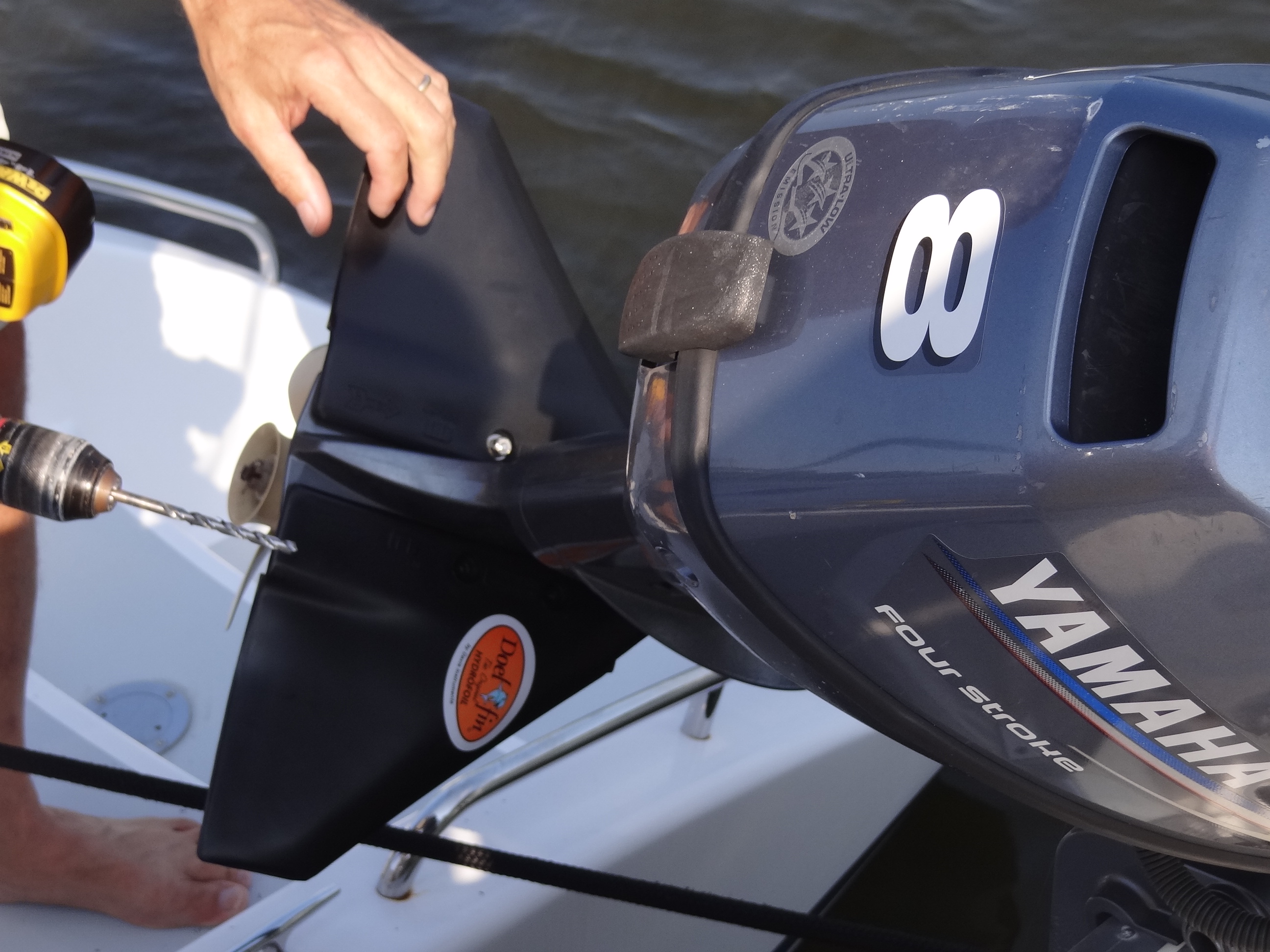
An addition to the prop that will help ensure success is our new Doel outboard fins. Seems 95% of the outboards we saw in the Bahamas had outboard fins and they do a fantastic job of getting Bunting up on plane in seconds. When we are up on plane the water is less likely to push into the chaps through the bottom. Our test run was amazing. “You mean we’ve been suffering all this time and all we had to do was to spend $40?”  Our 8 HP engine needs allthe help it can get. Ok, so this isn’t a sewing project, but it deserves mention.

Russ attaches new Doel fins to the outboard

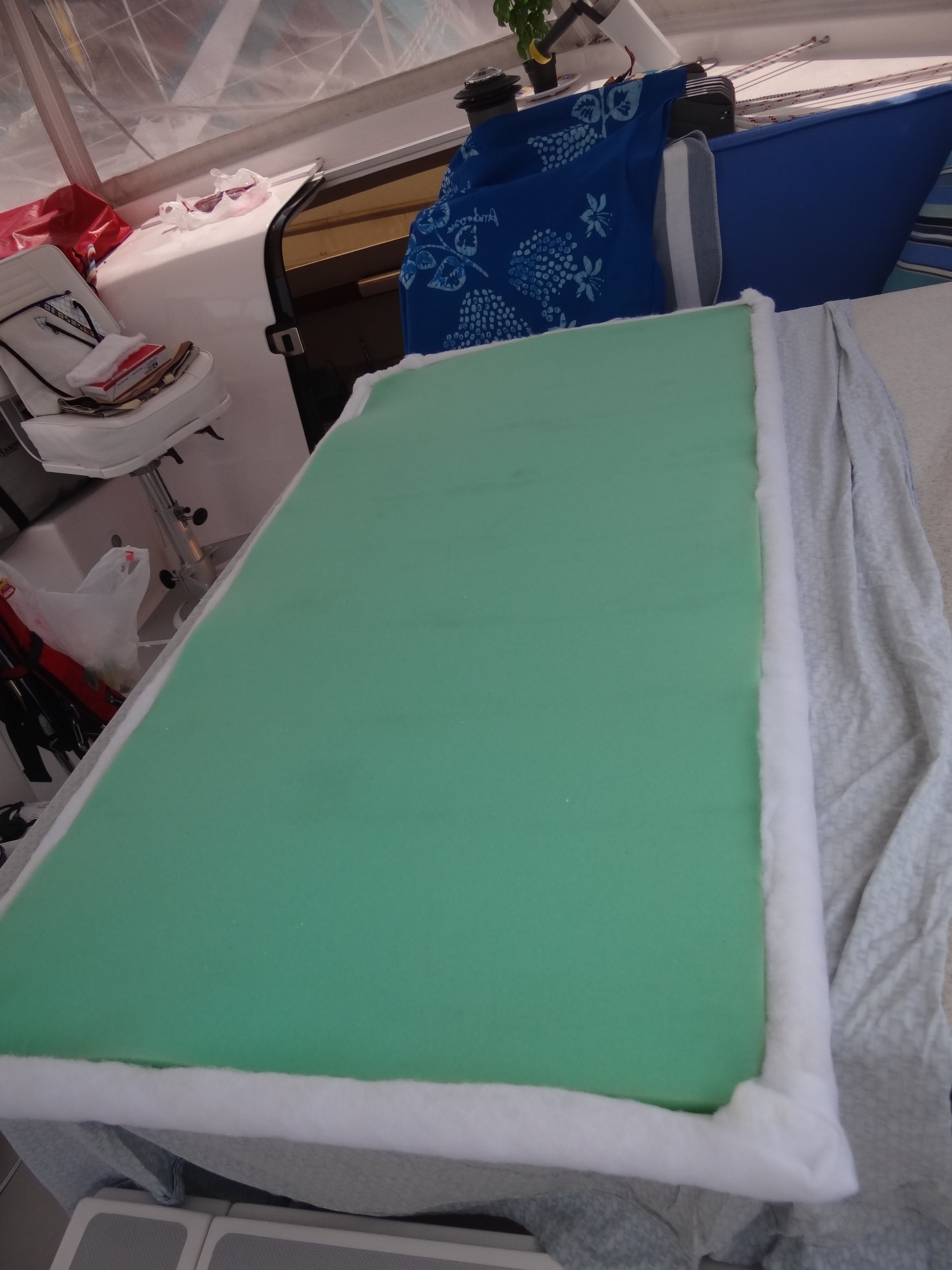
Moving along to interior decorating-not that I don’t like sewing Velcro, but let’s face it, curtains and a headboard are far more satisfying. In George Town I bought Androsia fabric in two colors- made guess where? Andros Island- the largest Bahamian island that almost no one visits. The darker (medium blue) fabric I used to make a headboard for our bunk. We constructed it from ¾” PVC, using 90 degree connectors at the two bottom corners and two 45s at each top corner. For added strength Russ put dowels inside the top and bottom PVC tubes. A 1” thick piece of 24”x48” foam rests inside the batting-wrapped PVC frame , then the fabric covers the batting on the forward-facing side.

Headboard frame with foam, batting wrapped over front and around PVC

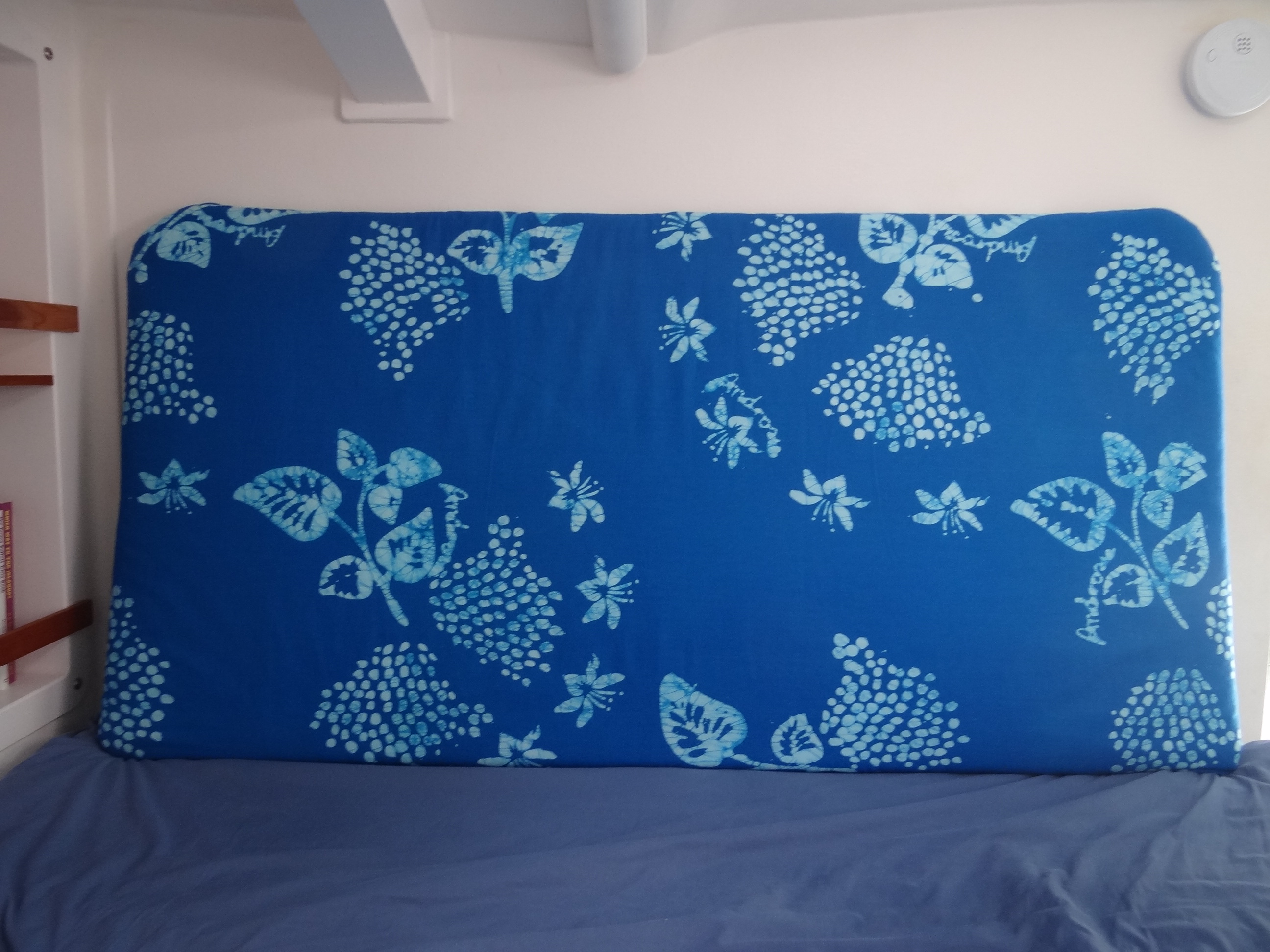
Extra-heavy duty Velcro attaches the headboard to the wall at the head of our bunk. This projects gets an “easy” rating and no sewing involved J.   Added comfort and color, sound absorption – all wrapped up in on day. My kind of project!

Headboard -before attached to wall

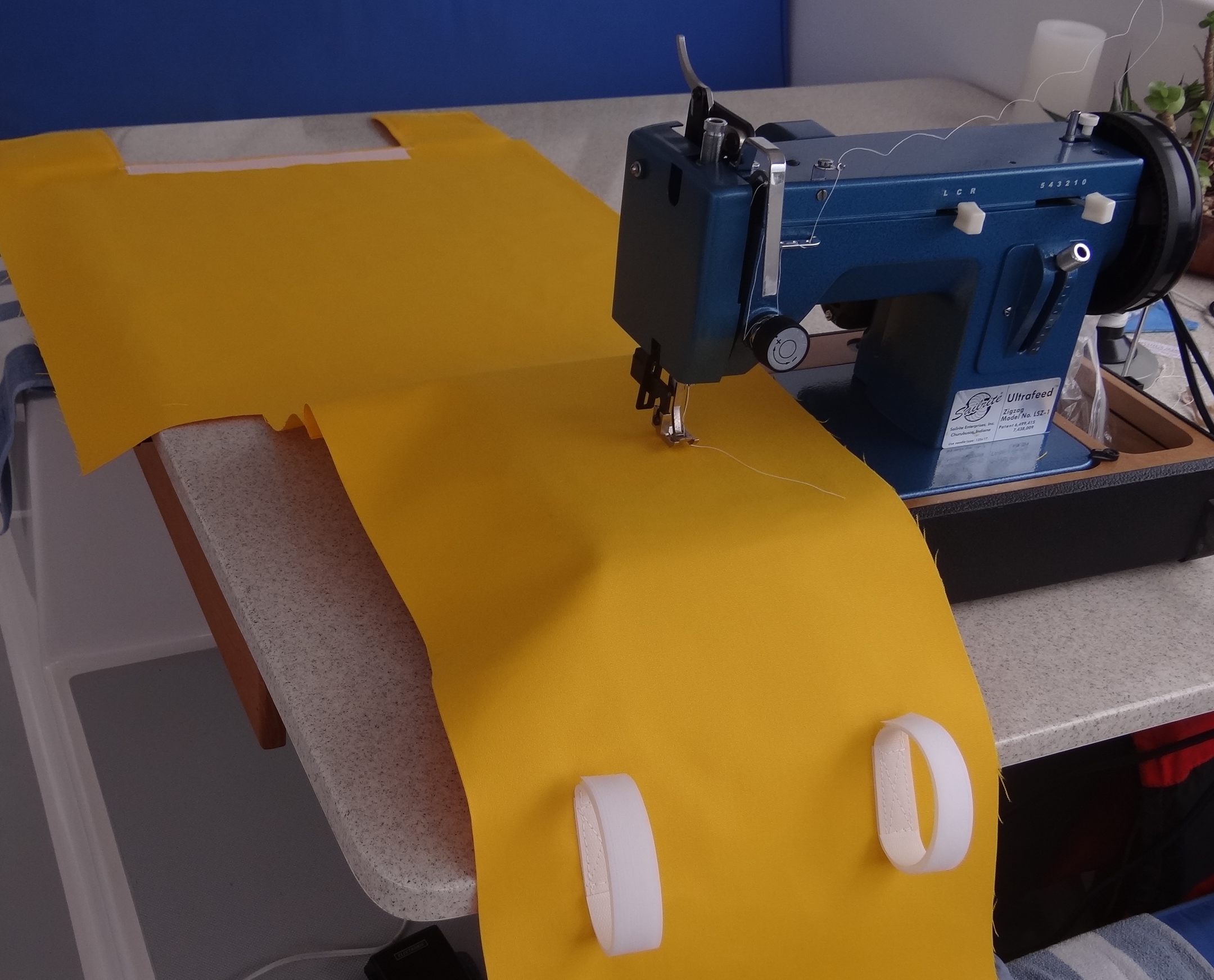
The curtain project required my Sailrite Ultrafeed LSZ machine- the boat anchor in a box, no weakling can lift it machine. Machine and carry case- what? Are they crazy? You can’t carry this thing; you can barely lift it on to the table! So you know who does that; no spur of the moment sewing for this faux-seamtress.

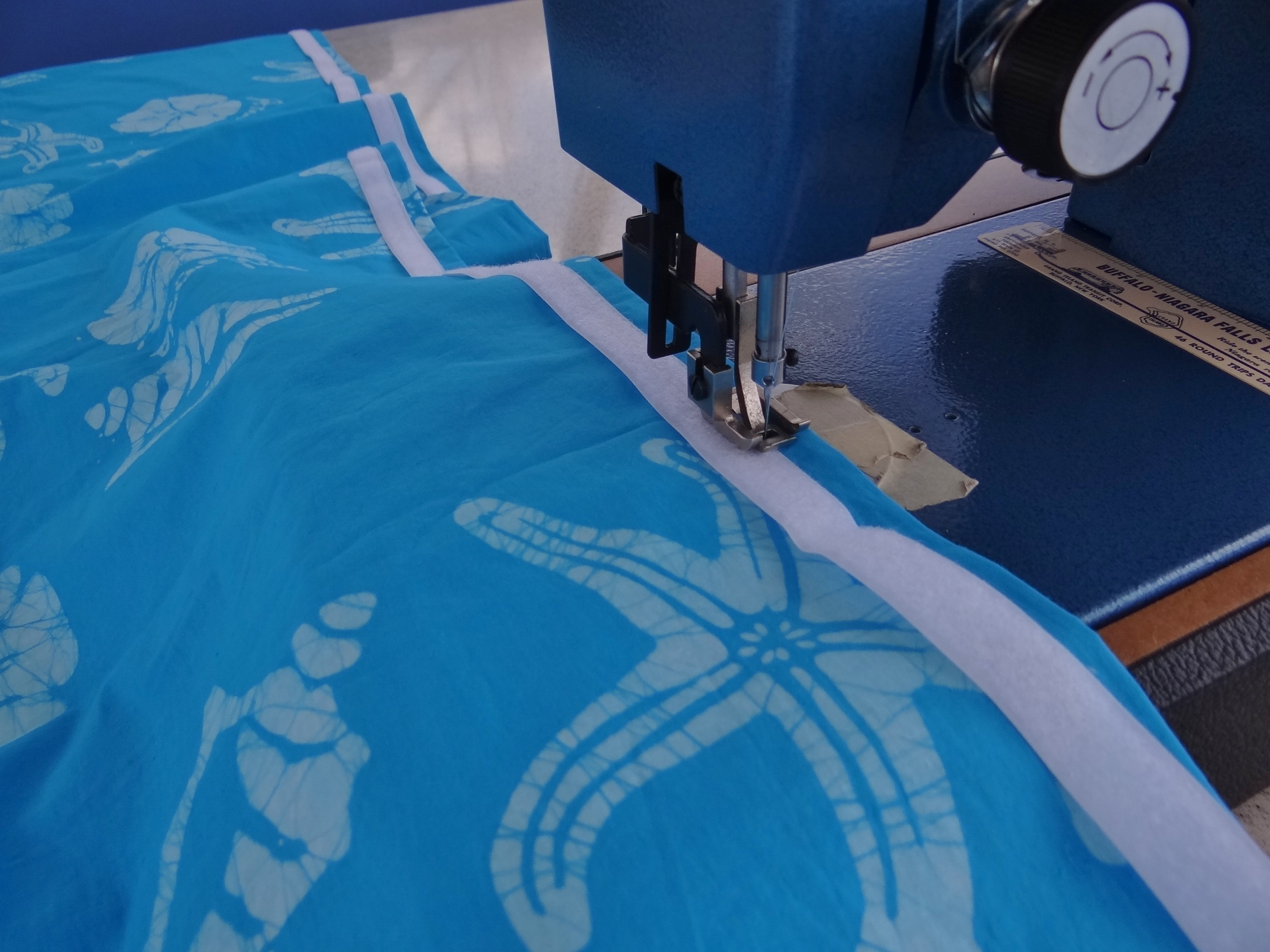
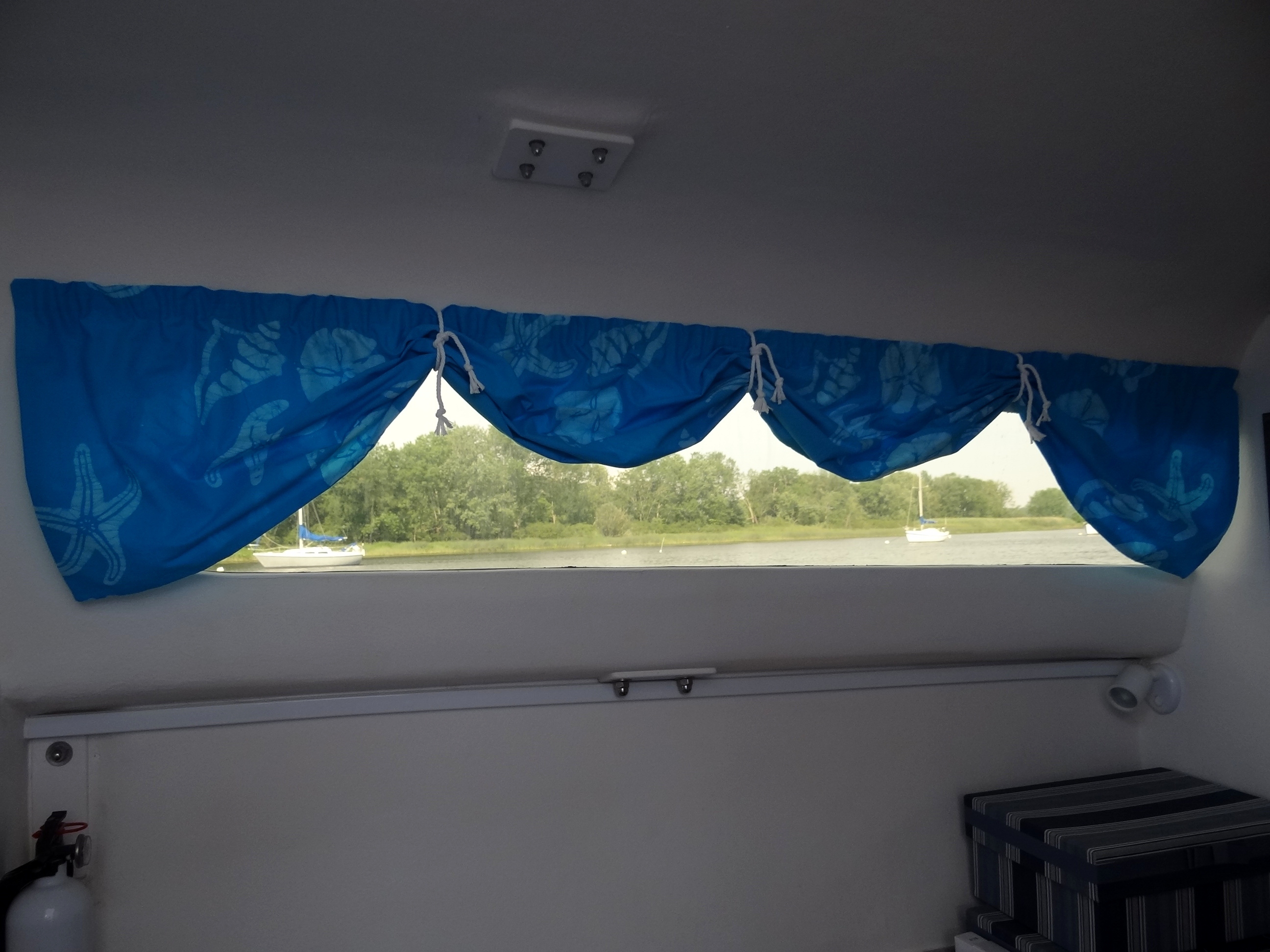
The curtains are another easy sewing project; just a bunch of rectangles with Velcro sewn at the top. We didn’t want to make another hole in the boat or spend much money,so… we kept it simple.  Last summer I made a curtain for the window next to the bunk on the port side so Benj could have privacy at night.  We used self-adhesive (hook) Velcro on the wall (the glue didn’t work) and I sewed the loop part along the top of the curtain.  I made the curtain longer than the window so it could be gathered a bit. When we leave CT I tie it up to let in more light.  That curtain worked out well so I did the same on our side, for both windows and with unplanned extra I made shorties for the galley.

Sewing Velcro loop to curtain top

The tied-up look.

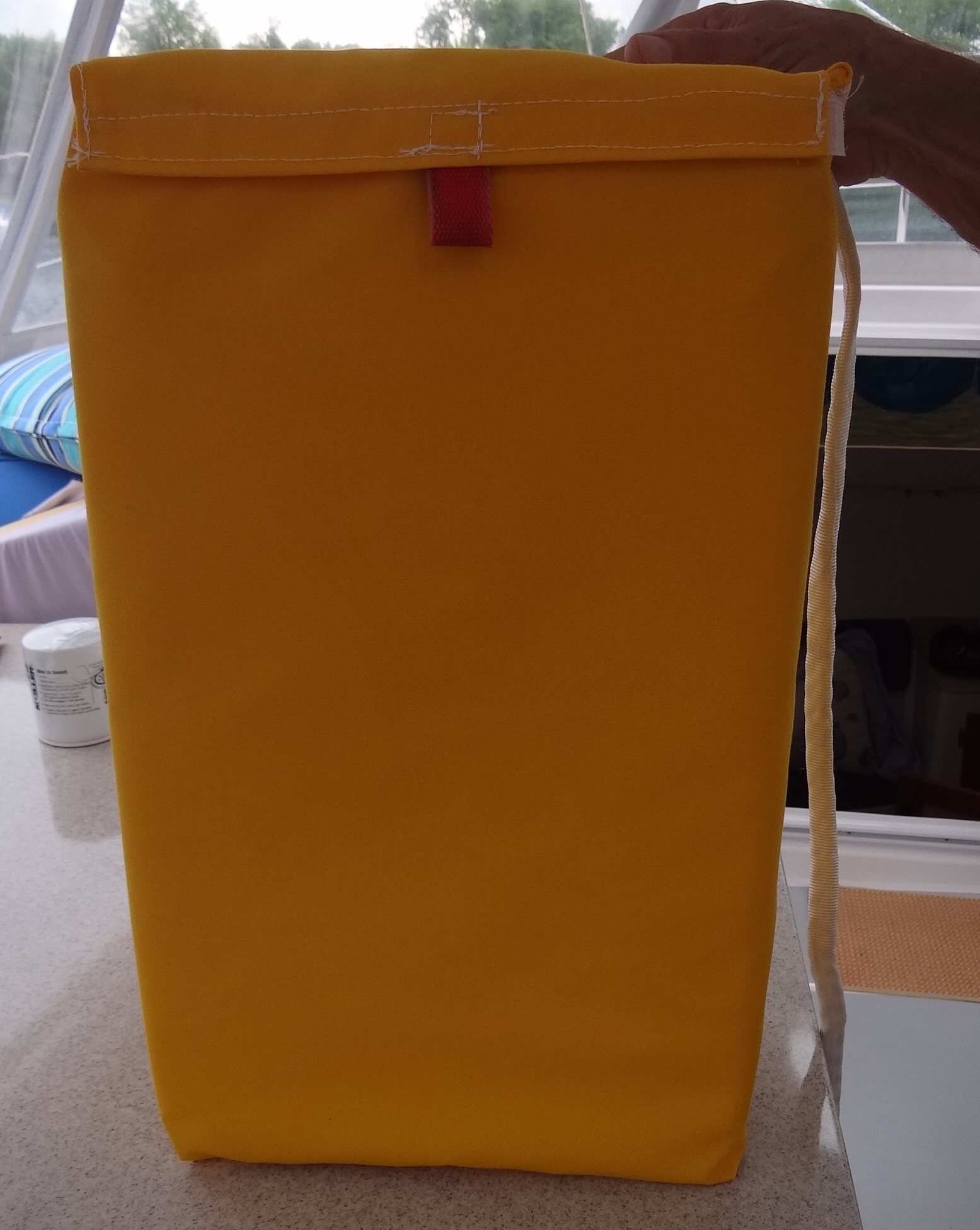
With that, I thought for sure I was done. Alas, the Captain ever vigilant noticed our Lifesling bag was looking, well, extremely faded and I had to agree. I ordered a yard of 45” wide Sunflower yellow Sunbrella marine grade fabric from my favorite supplier of all things sewing and I less than a day- voila! a new cover. I think I’m getting the hang of all this- what should I call it?- non-garment sewing. Since my first Singer machine at age 13, 95% of my sewing was clothes; piping was not in my vocabulary.

The Lifesling bag was constructed using only pieces of material; I took it apart and used it for a pattern. We’ve accumulated a decent inventory of Velcro and happened to have exactly what was needed for the bag. I re-used the red webbing from the old bag: something old, something new, something sewed; it’s better for you!   A new, purchased bag would have cost us $50; this was no more than $20.

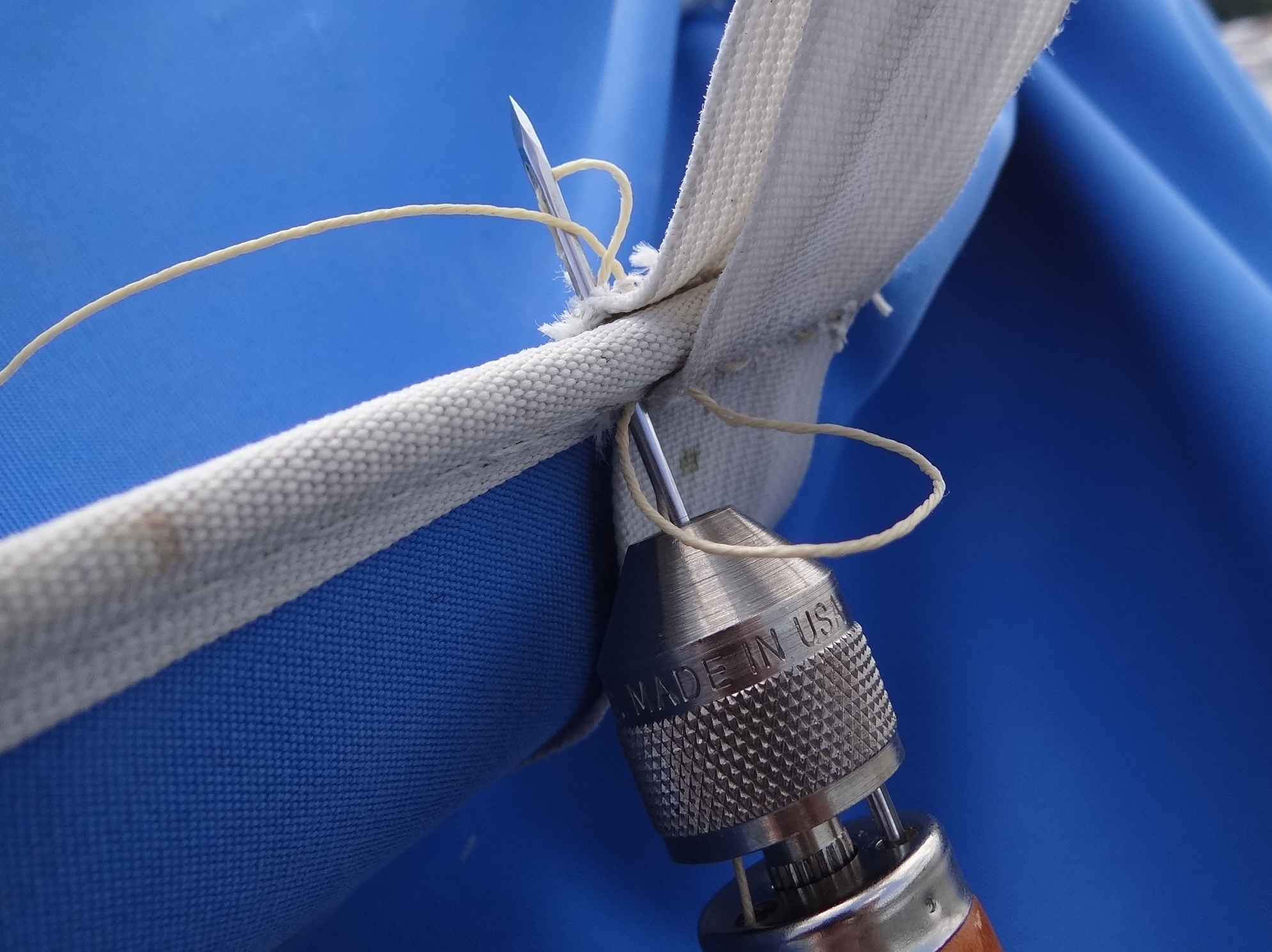
My prior order from Sailrite included a clever gadget called the Speedy Stitcher Sewing Awl. I watched the how-to video and now own a device that is “sew” the opposite of the Ultrafeed.  Designed for repairs that you can’t do with a machine, it is simplicity itself. The needle is sharp as hell; I left “Lori was here” marks on both sides of the stackpack support straps. The stitcher comes with thick waxed thread and two needles: straight and curved.  I bought fine waxed thread and a thinner needle to use for that and the V-92 polyester thread I use for my Sunbrella sewing.

Sewing awl at work