Abaco in Photos

Our Hope Town stay began a little rainy

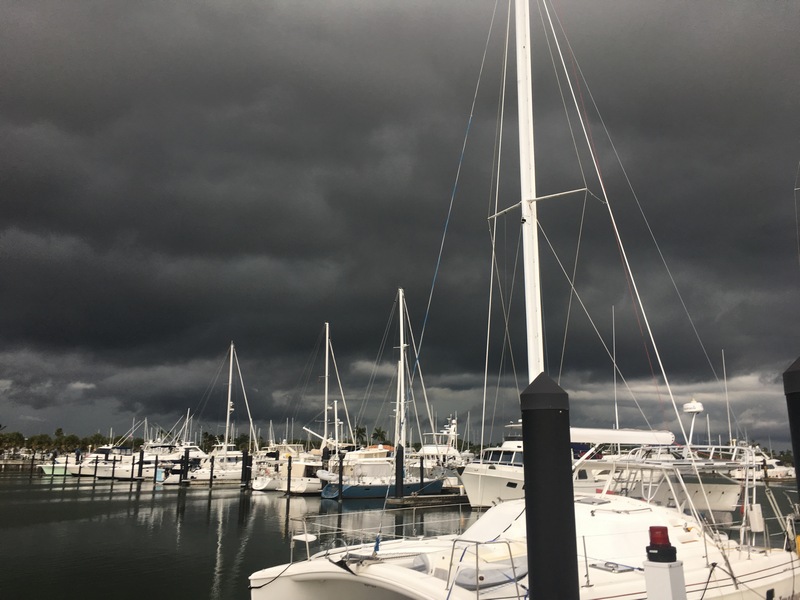
And a little breezy

Followed by an interesting sun halo

Out & about

A first – Weevils in our pasta!

Hard to read the sign “Sugar Apple Snore Box”. The best we could learn is that a “snore box” is commonly a one-room sleeping cottage (without kitchen, bath, etc.). So this is the “snore box” of the Sugar Apple cottage?  Also used by fisherman near docks so they could depart before dawn.

A panoramic photo of the Top-10 Treasure Cay Beach.

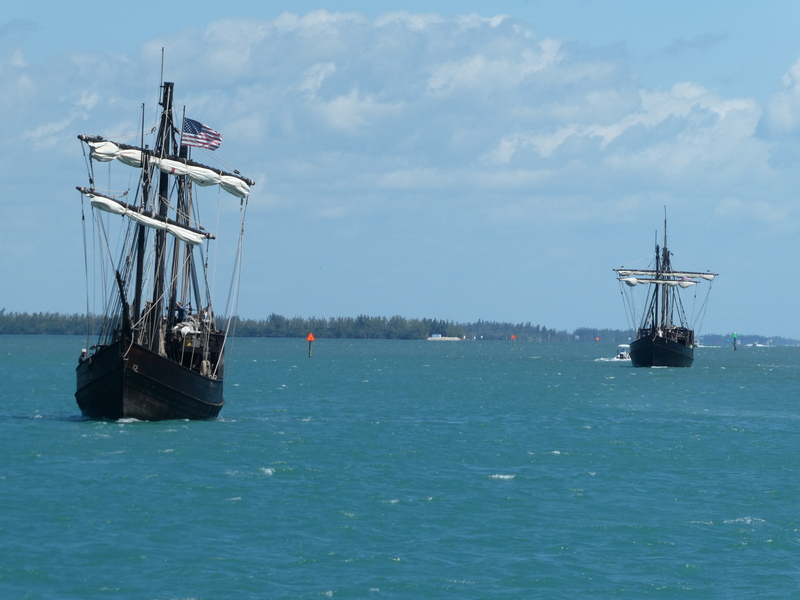
Nice photo of us leaving Hope Town – Thanks Tim!

Our new friend visited us while anchored off Green Turtle Cay

The LAST Barefoot Man concert at Nippers

The Barefoot Man – Crazy, but fun beach music

This is the “scary” Whale Cay Passage. In the ’80’s, Disney bought part of neighboring Guana Cay and built a cruise ship “resort”. Believe it or not, this passage was often so rough that their huge cruise ships couldn’t safety transverse it and was therefore abandoned.  With strong northeast winds, there can be 8′ – 12′ swells coming in.

This is a piece of a Falcon 9 Rocket launched from Cape Canaveral which landed near Elbow Cay & washed onto Tahiti Beach. Apparently Elbow Cay is in the trajectory of the launches & there have been many test flights the last few years by SpaceX and the others. At first, NASA would send crews to recover the pieces – now, not so much.

Our last meal before leaving the Abacos. Da Valley – a very local kind of place in Fox Town

Hands down, the BEST cracked conch and lobster ANYWHERE in the Bahamas!

Our time in the Bahamas has come to a close for this year.  We’ll be staging to cross back to Florida in the next few days.


Expensive in the Islands!

Paradise doesn’t come cheap.  90% of everything is imported into the Bahamas, mostly from the U.S.  Food, building materials, fuel, you name it.  While there is some farming, the soil doesn’t really lend itself to high output.  There is fishing of course, but boats are expensive, fuel is over $5.00/gallon & some species are in decline (especially their famous conch).

Importing & delivery to the smaller islands is even more expensive as the larger ships from Florida can’t arrive directly – everything has to be off-loaded to Nassau or elsewhere, then re-loaded onto smaller boats/ships which can enter & dock into a smaller harbor & taken off with booms into small trucks, pickups or golf carts.

Delivery day in Hope Town, Abaco. This freight boat makes about 3 trips a week from nearby Marsh Harbour, while much of the northern Exumas, for example, receives their freight by old “mailboats” only 3 times a month, coming all of the way from Nassau.

This fuel came a long way – starting in the U.S. (or Central America?) via a large tanker, then a smaller tanker to Abaco, then onto a tanker truck driven onto a work barge piloted by tug into this marina. No wonder diesel is over $5.00/gallon.

How expensive?  Double is a good rule of thumb, but triple or more is not unusual.  Why so much?  Tacked onto the cost of goods from Florida is obviously the cost of transport by ship from Florida, freight & custom brokers, plus an average 30% Bahamian government import tariff.  The smaller “family” islands have the additional cost of intermediate boats/ships to get to their island along with the increased cost of smaller volume.

Probably our smallest grocery store receipt all winter.

As if that isn’t enough, in 2014 the Bahama government instituted a 7 1/2% VAT on everything (even food).  Last year the VAT was increased to 12%!  Remember – this is 12% on the inflated Bahamas pricing, so effectively over 20% based on U.S. prices.  While they’re calling it a “value added tax”, it seems similar to a sales tax on everything at the retail level – many services too.  Fortunately, they have lowered or eliminated the import tariffs on some items, but most items still have tariffs from 5% to 50%+.  The only food concession they made is making about a dozen foods VAT exempt – not food groups – a dozen basic foods.

Of course, I can’t really complain – we only spend a few months here & have more resources than 95% of Bahamians.  But how does the average Bahamian cope?  It’s particularly concerning as their economy relies primarily on tourism.  Currently the U.S. economy is robust & tourism to the Bahamas is up, but what will happen when the next major U.S./Canadian recession hits?