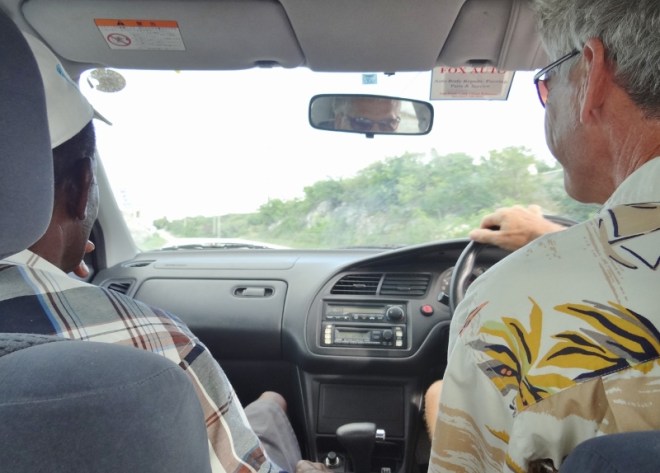
Russ takes Driver’s Ed Bahamian style 101
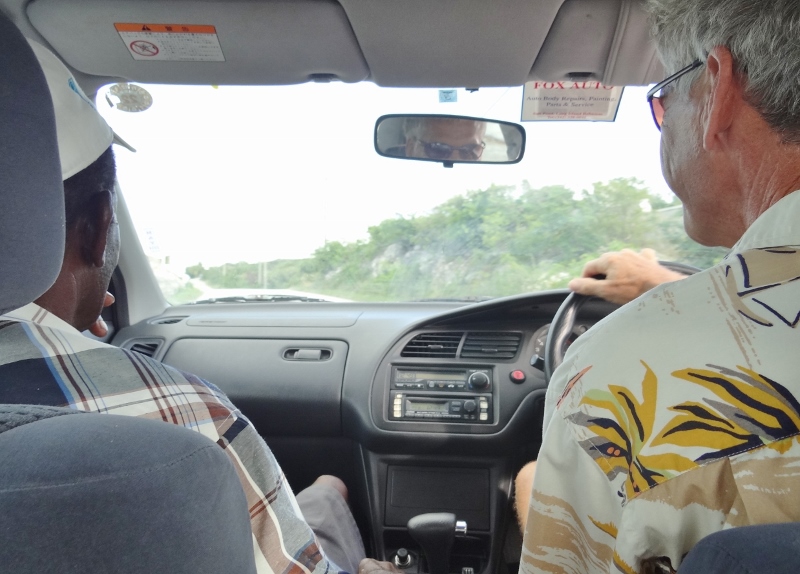
So states Stanley; thus we attempt to see only the southern half in one day. Actually we didn’t even get as far as the lower quarter; only down to the Diamond Salt Works ruins in Hard Bargain and north as far as Morris (approx. 6miles north of Thompson Bay) where Stanley lives. The businesses and individuals who rent vehicles do it Enterprise-style; they bring the car to you and pick you up. Stanley is one Bahamian who works smart and hard, raised 6 sons and 2 daughters and really impressed us by being prompt on the phone and bringing the car; a Honda Accord with steering wheel on the right. Benj rode shotgun and was in charge of the “keep left” reminders.
Our day began on a humorous note. We were to get picked up in front of Long Island Breeze and didn’t know the rental man’s name. So we’re standing in front with our bag of stuff when a Bahamian man walks up and greets us, we exchange names and Russ is saying words that include, “car”. He motions us to follow him upstairs where Michael and Jackie are finishing breakfast then smiling because the man is one of their workers who thought we were new guests. If you have ever heard Bahamians talk, you know they talk rather fast and with a cadence and phraseology that can be difficult to decipher.
We didn’t have to stand around feeling foolish for long as Stanley drove up shortly and off we went. Last year Russ and I rented a car and saw some of the same sights we’d see today, so check the Jan 28, 2013 post for more photos.
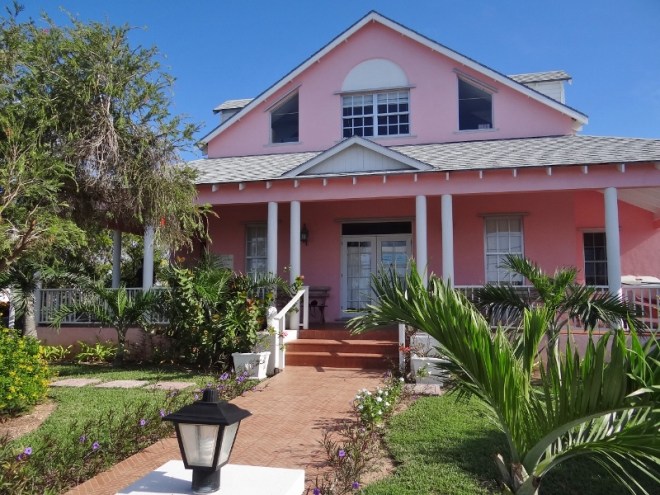
The museum and library in Buckleys
The museum doesn’t allow photographs to be taken inside which was a shame since the displays were very interesting and depicted much of past and present life on Long Island. Sea Beans were used to play a children’s game, sea fans made good strainers and plaiting was a major source of income for many women.
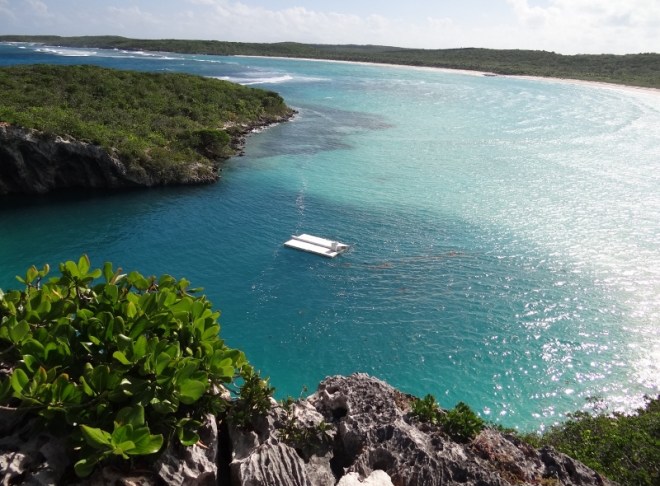
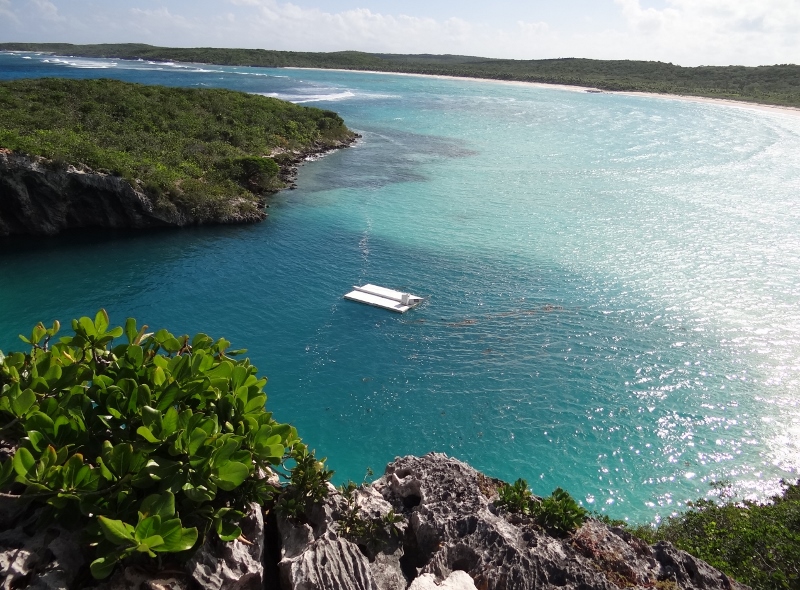
Overlooking the famous blue hole in Deans
The guys climbed the path to the top of the ridge while I walked the beach.

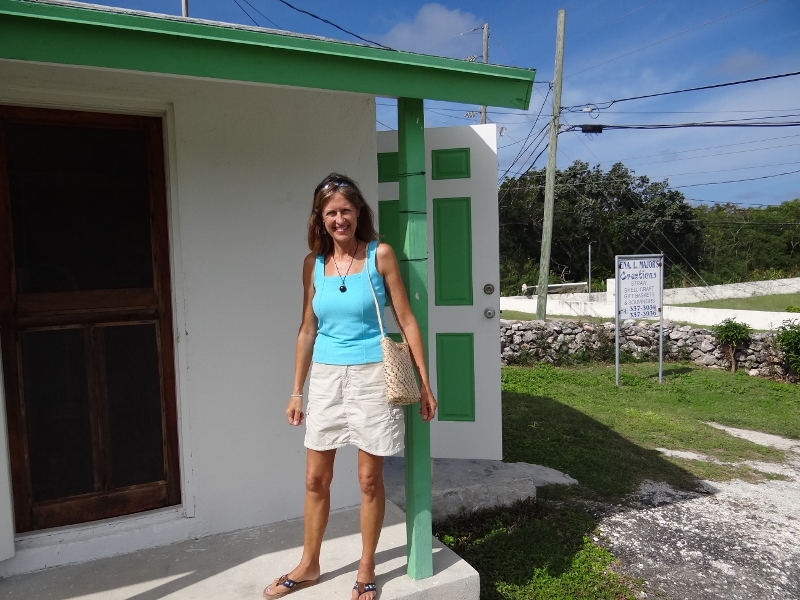
We stopped to shop at Ena’s tiny store in Clarence Town
If I understood the docent at the museum correctly, Ena is one of the last (if not THE) women to have been taught a fantastic array of plaiting patterns by a woman who created many of them and taught others. Long Island is well-known for this beautiful and versatile use of palm and silver palm leaves. I found a purse with a purple accent color that I couldn’t resist for less than $25. The bag is made from a single very long plait that begins at the base and wraps around in overlapping circles all the way to the top, then the width and pattern change to make the top edge. Just beautiful crafting.
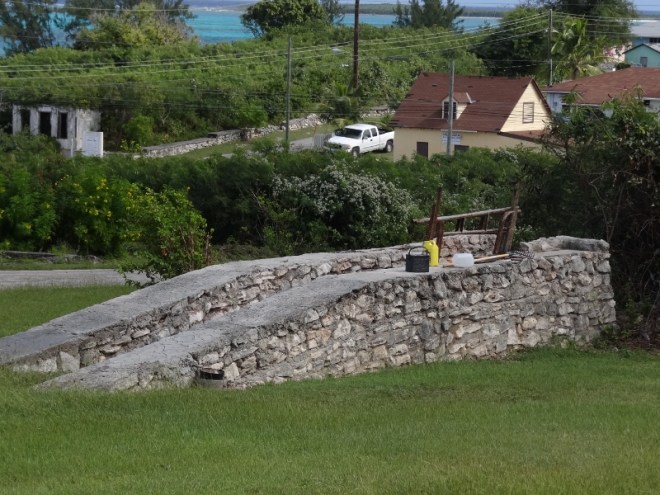
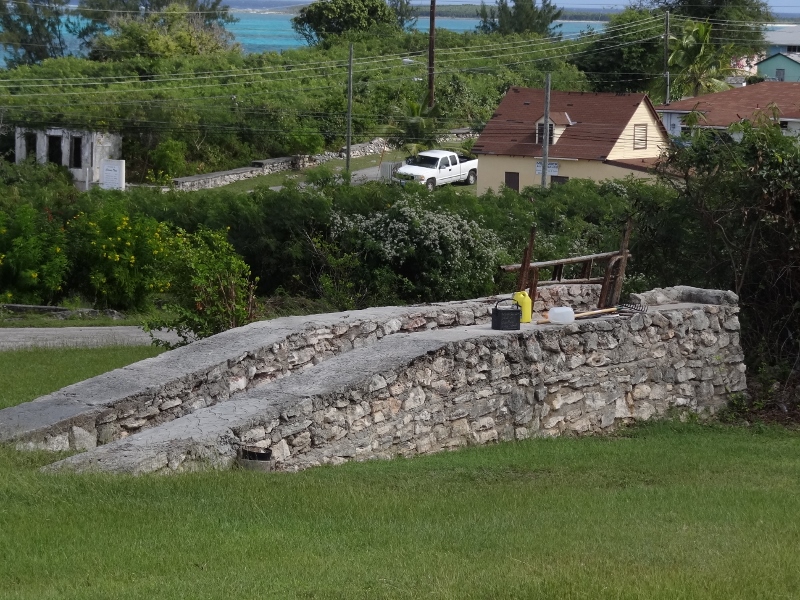
This practical structure was a new sight for us
It really is what it looks like- bet you can figure it out.

These youngsters were curious and polite
We detoured off the Queen’s Highway which runs the length of the island. Before the road was paved in 1995 it was named the King’s Road. We’d only gone a short ways when a goat sitting in the road caused us to stop. When we did six children came over to check us out. A woman came out too and asked us if we were all one family and said they were too. This was grandma who was caring for the kids on Saturday while mom worked. She wasn’t bashful about asking me (mom to mom) for “something for the kids.”
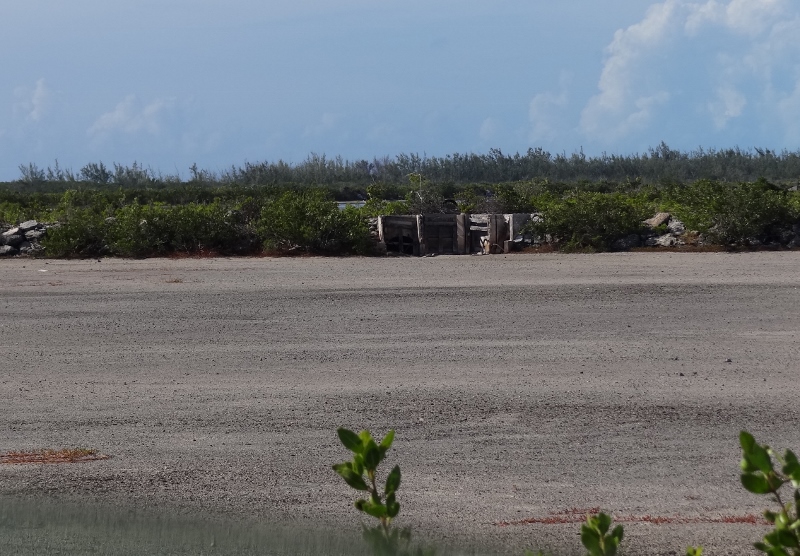
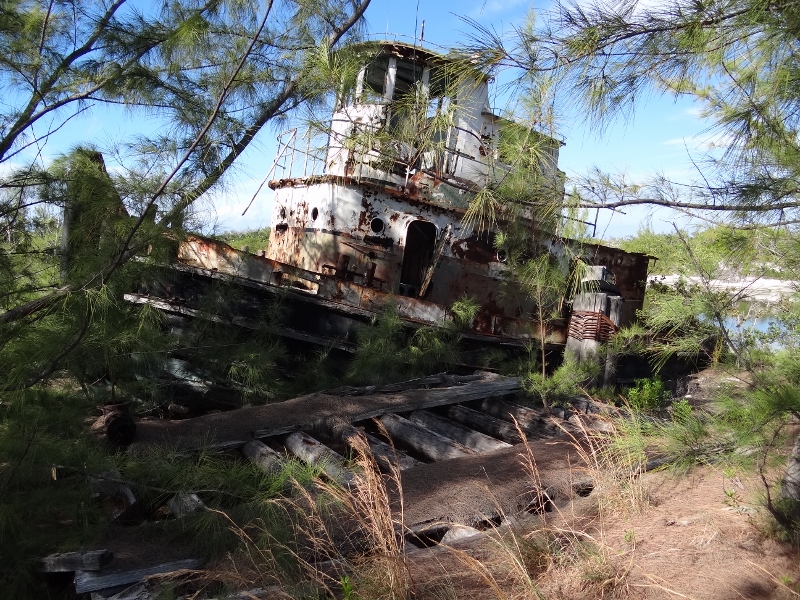
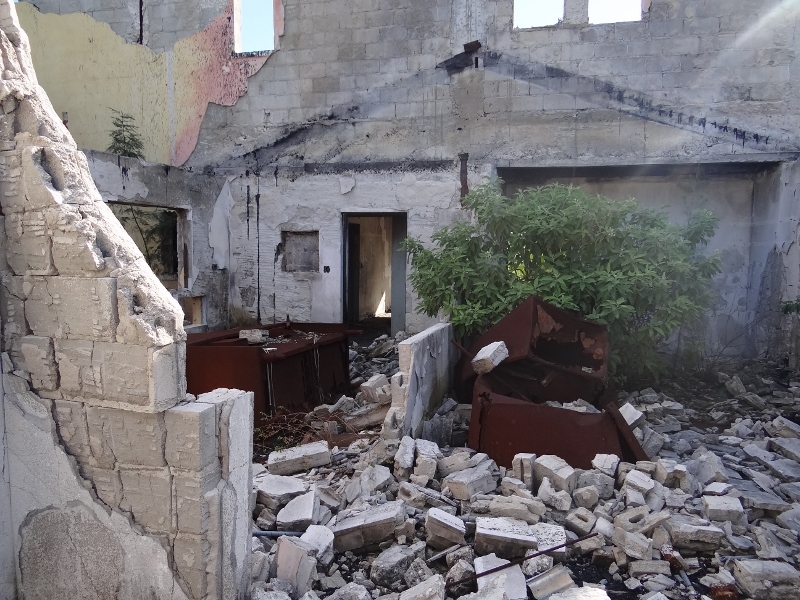
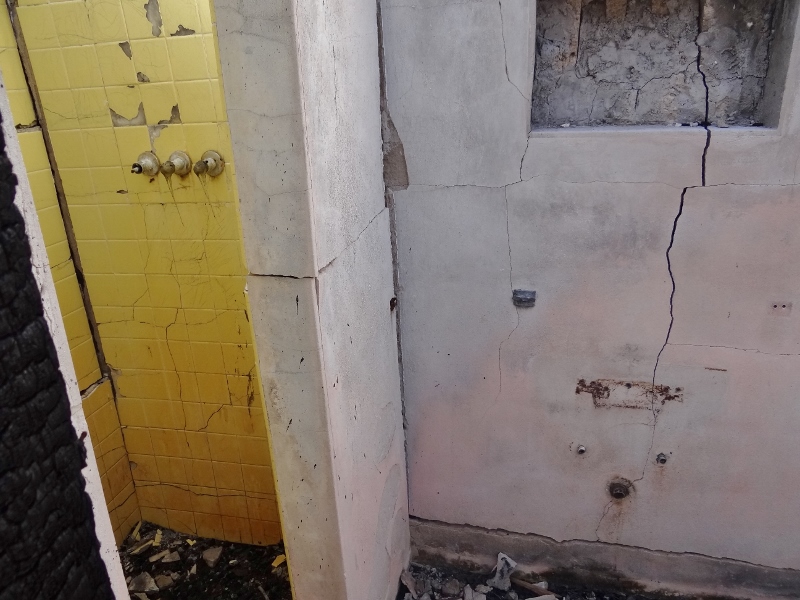
Our next and last big stop was the salt works a few miles south of Dunmore in Hard Bargain. Stay tuned for the next post on the abandoned Diamond salt ruins


 Cruising along the East Coast and Bahamas